
Downloaded from hlayiso.com
HISTORY
SCHOOL-BASED
ASSESSMENT
EXEMPLARS – CAPS
GRADE 12
LEARNER GUIDE
Skip to contentSBA exemplar 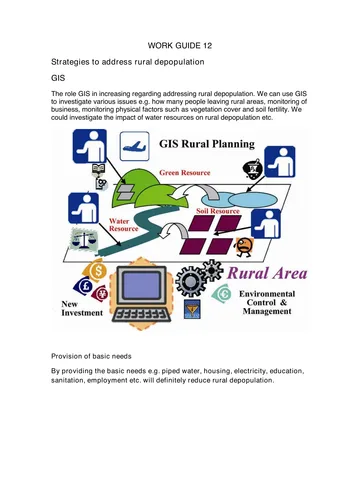
%20Memo_hlayiso.com_--4fe0001f-11e9-414e-be30-45108ea0ae86/v1-2b5a2c0ac74d623b88fe/card.webp)
%20SEP%202022%20Possible%20Answers_hlayiso.com_--840540f3-b117-4271-886e-89f327a57fe1/v1-1384d56609855cc674f1/card.webp)
%20SEP%202022%20Question%20Paper_hlayiso.com_--b9febe6f-40ad-443e-83f9-8103293719b2/v1-6246b6d7ab1217949b99/card.webp)
%20SEP%202022%20Question%20Paper_hlayiso.com_--4ecf07fc-c5be-4181-868c-5e74b2676b7a/v1-37bffaf38506ee52a7a5/card.webp)
View all
History LG ENG
Grade 12 History SBA exemplar (English), 44 pages. Read online or get the free PDF download.
Publisher: Learner guide
History · Grade 12 · English. SBA exemplar, 44 pages. Read online or download the PDF.
- Subject
- History
- Grade
- Grade 12
- Language
- English
- Document type
- SBA exemplar
- Publisher
- Learner guide
- Curriculum
- CAPS
- Pages
- 44
- File size
- 1.7 MB
Loading document…
Loading document…
1 of 44
Document textSearch extracted text and jump to a page.
Downloaded from hlayiso.com
Downloaded from hlayiso.com
HISTORY
SCHOOL-BASED ASSESSMENT
EXEMPLARS – CAPS
GRADE 12
LEARNER GUIDE
HISTORY SCHOOL-BASED ASSESSMENT EXEMPLARS – iii CAPS GRADE 12 LEARNER GUIDE
Downloaded from hlayiso.com
Downloaded from hlayiso.com
TABLE OF CONTENTS PAGE
1. Introduction 3
2. Aims and Objectives of School-based Assessment 3
3. Assessment Tasks as outlined in the CAPS 4
4. Guidelines for School-based Assessment 5
5. Bibliography 35
HISTORY SCHOOL-BASED ASSESSMENT EXEMPLARS – 1 CAPS GRADE 12 LEARNER GUIDE
Downloaded from hlayiso.com
Downloaded from hlayiso.com
1. INTRODUCTION
Assessment is a continuous, planned process of identifying, gathering and interpreting information about the
performance of learners, using various forms of assessment. School-Based Assessment (SBA) is a purposive
collection of learners’ work that tells the story of their efforts, progress or achievement in a given area. The quality
of SBA tasks is integral to learners’ preparation for the final examinations.
This booklet serves as a resource of exemplar SBA tasks for learners who study History. SBA marks are formally
recorded for progression and certification purposes. The SBA component is compulsory for all learners. Learners
who cannot comply with the requirements specified according to the policy may not be eligible to enter for the
subject in the final National Senior Certificate (NSC) examination.
This publication comprises of several tasks that address the demands of the Grade 12 History curriculum. It
is expected that this booklet will serve as a valuable resource for Grade 12 History learners. It provides useful
information which will assist you in your preparation for the NSC examinations in History.
2. AIMS AND OBJECTIVES OF SCHOOL-BASED ASSESSMENT
The aim of this resource booklet is to assist you in your preparation for the Grade 12 examination from 2014
onwards. It contains crucial information on how to work with the prescribed content as contained in the Curriculum
and Assessment Policy Statement (CAPS).
The booklet contains information on how to undertake a research assignment, work with sources and write a
coherent essay. A step-by-step approach on how to undertake a research assignment is given. The Research
Assignment forms a significant part of your SBA mark for History. Hence, you are encouraged to use these
guidelines when preparing to submit your assignments for final assessment. In addition, exemplars of source-
based questions and essays are also provided. It outlines clearly the format, style and cognitive levels of questions
which learners will be required to answer in their SBA tasks in Grade 12 History.
Our objective is to help learners succeed in Grade 12 History. Therefore, you are encouraged to use this resource
booklet to sharpen your skills in History in order to achieve a good mark.
HISTORY SCHOOL-BASED ASSESSMENT EXEMPLARS – 3 CAPS GRADE 12 LEARNER GUIDE
Downloaded from hlayiso.com
3. ASSESSMENT TASKS AS OUTLINED IN THE CAPS
The final Grade 12 mark is calculated from the National Senior Certificate (NSC) examination that learners will
write (out of 300 marks) plus school-based assessment (out of 100 marks). The curriculum policy document
stipulates SEVEN formal tasks that comprise school-based assessment in History. The table below outlines the
programme of assessment that needs to be completed in your Grade 12 year.
Term 1 Term 2 Term 3 Term 4
3 tasks 2 tasks 2 tasks
• Source-based task • Essay task (or source-based • Standardised test,
(or essay; learners must task; learners must do one of which includes a
do one of each). each). source-based section
and an essay (ideally,
• Research assignment • Mid-year examination (2 both sections will be
(can also be done in the papers of 2½ hours each) tested at the same
second term). (2 topics from each paper time). • Final external
to be covered by June; four examination
• Standardised test which questions set in each paper: • September/
includes a source- 2 essays and 2 source- Preparatory
based section and an based questions; learners to examination
essay (ideally both answer 2 questions, 1 essay
sections will be tested and 1 source-based question (2 papers)
at the same time). on each paper.
75% of total year
25% of total year mark = 100 marks
mark = 300 marks
HISTORY SCHOOL-BASED ASSESSMENT EXEMPLARS – 4 CAPS GRADE 12 LEARNER GUIDE
Downloaded from hlayiso.com
4. GUIDELINES FOR SCHOOL-BASED ASSESSMENT
4.1 RESEARCH ASSIGNMENT: Grade 12
To ensure that there is compliance with the requirements of SBA in History, an example of how to undertake
research is given below.
Introduction
The research assignment in Grade 12 accounts for 20% of the total school-based assessment (SBA). It is, therefore,
essential that this be a significant piece of work. This assignment offers learners the opportunity to demonstrate
their skills, knowledge and understanding of History which they have acquired during the course of the FET phase.
The research assignment can be written on any section of the Grade 12 curriculum. There are, however, two
sections in the curriculum, which are not formally examined in the final Grade 12 examination:
• An overview of civil society protests
• Remembering the past: Memorials
It is recommended that one of these topics be investigated as a research project.
Some points to consider when planning a research assignment:
• The choice of research topic needs to be made, taking into consideration the context of your school and the
available resources to which learners have access.
• This assignment provides learners with an opportunity to embark on a process of historical enquiry.
Conducting original research involves the collection, analysis, organization and evaluation of information,
and the construction of knowledge.
• Clear, written instructions with due dates and the assessment criteria must be given to learners at the
beginning of the school year to allow adequate time for the preparation and completion of the assignment.
• The progress of learners, with regard to the research assignment, must be monitored on an on-going basis.
• It is essential that learners submit original work. To reduce the likelihood of plagiarism, the key question or
research topic should be changed every year.
Learners are expected to fulfil the following requirements in their research assignment:
• Analyse and answer the key question.
• Identify a variety of relevant source materials to help answer the key question.
• Select relevant examples from the source material which can be used to substantiate the line of argument.
• Organise relevant information in order to write a coherent and logical answer to the key question.
• Write an original piece of work, using your own words.
• Correctly contextualise all sources, including Illustrations and maps, which have been included.
• Reflect upon the process of research and consider what has been learnt.
• Include a bibliography of all the resources which have been consulted in the course of researching and
writing the assignment.
HISTORY SCHOOL-BASED ASSESSMENT EXEMPLARS – 5 CAPS GRADE 12 LEARNER GUIDE
Downloaded from hlayiso.com
Some suggestions of what can be done with the research assignments when they are completed:
• The research assignments should be displayed at your school, community hall or local library. Exhibiting the
learners’ work is very important. It gives learners a sense of purpose and shows them that their ideas and
efforts are of value to their school and community.
• Learners could give an oral presentation of their research projects to the class, grade, school or local
community. This gives learners the opportunity to speak about their research and share their ‘new-found’
knowledge.
• Organise a class debate on the key question.
• Hold a History evening at which learners could be given an opportunity to present their work to friends,
family and members of the community. Further, this will be an ideal platform to showcase the work of the
school’s History department in an endeavour to promote the subject History at the FET level.
HISTORY SCHOOL-BASED ASSESSMENT EXEMPLARS – 6 CAPS GRADE 12 LEARNER GUIDE
TABLE SHOWING HOW TO STRUCTURE AND CARRY OUT RESEARCH
KEY QUESTION: How was the role of women in the struggle against apartheid different from that of men?
STRUCTURE OF A RESEARCH
SUGGESTIONS ON HOW TO CARRY OUT RESEARCH
ASSIGNMENT
Hint 1: ü Analyse the key question and make sure that you fully understand what is being asked.
Before you start your research ü In this case, you need to decide whether women did or did not play a different role in the struggle against apartheid
to that by men.
ü It is acceptable to argue that in some instances women played a different role to men in the struggle against apartheid,
while in other instances they played a similar role.
Cover Page ü Use the 'Cover Page for a Research Assignment' and 'Monitoring Log'. [Annexure A, p.9 and Annexure B, p. 10]
Introduction ü Explain the approach that will be taken in your research assignment
(Write approximately ½–1 page) ü Indicate the line of argument that will be taken to answer the key question.
Background ü Explain the historical context of the question.
HISTORY SCHOOL-BASED ASSESSMENT EXEMPLARS –
(Write approximately 1–2 pages) ü Give some background information about the policy of apartheid and how it was implemented until the 1980s.
7
ü Use the information from your Grade 11 and Grade 12 textbooks to assist you in writing this section of the assign-
ment.
Hint 2: ü Ensure that you have a plan so that your time is used effectively to meet deadlines.
During the research process ü Refer to the list of resources that may be consulted. [Annexure C, p.11]
ü At all times keep the key question in mind. Keep asking yourself whether the information you are gathering is relevant
Downloaded from hlayiso.com
to the question.
ü Use the template to help structure your note-taking. [Annexure D, p.14]
CAPS GRADE 12 LEARNER GUIDE
Body of Essay ü In this section you present and substantiate your argument.
(Write approximately 2–3 pages) ü Select evidence from your readings which could be used to substantiate your line of argument in answering the key question.
ü Remember that the struggle against apartheid took different forms. For example, you could discuss the role that women
played in any of the following:
- Political: You could discuss women's membership of political organisations (e.g. ANC Women's League or Black Sash)
and their involvement in campaigns which attempted to bring an end to apartheid (e.g. 1956 Women's anti-pass cam-
paign). You could investigate the impact that apartheid policies, such as the Group Areas Act, had on women. (E.g.
Women who were forcibly removed from Crossroads in Cape Town to the Transkei and Ciskei).
- Economic: You could discuss the jobs that women did and how their opportunities were limited under apartheid (e.g.
women's experiences as domestic workers, the role that women played in the trade union movement; or the hardships
and poverty which women experienced in the Bantustans.)
Conclusion ü In this paragraph you should sum up the argument that was sustained and developed in the body of your research assign-
ment.
(Write approximately ½–page)
Reflection ü In this section you should discuss what you have learnt from this research assignment.
(Write approximately ½–1 page) ü Explain what insights, skills and knowledge you have acquired while undertaking this research.
Bibliography ü List ALL the resources that you used during the preparation of your research assignment.
HISTORY SCHOOL-BASED ASSESSMENT EXEMPLARS –
ü An example of how to correctly format a bibliography is included [Annexure E, p.15].
8 Hint 3: ü Check that you have complied with the following requirements:
Before you submit your research o Front Cover
assignment
o Introduction
o Background
o Body of evidence
o Conclusion
Downloaded from hlayiso.com
o Reflection
o Bibliography
ü Proofread your work thoroughly to check for coherence, spelling and grammatical errors.
CAPS GRADE 12 LEARNER GUIDE
Downloaded from hlayiso.com
ANNEXURE A: EXAMPLE OF A COVER PAGE FOR A RESEARCH ASSIGNMENT:
GRADE 12 RESEARCH ASSIGNMENT: HISTORY
NAME OF SCHOOL
NAME OF LEARNER
SUBJECT
RESEARCH TOPIC
KEY QUESTION
STATEMENT OF AUTHENTICITY:
I hereby declare that ALL pieces of writing contained in this research assignment, are my own original
work and that if I made use of any source, I have duly acknowledged it.
LEARNER’S SIGNATURE:____________________________________________
DATE:_____________________________________________________________
HISTORY SCHOOL-BASED ASSESSMENT EXEMPLARS – 9 CAPS GRADE 12 LEARNER GUIDE
Downloaded from hlayiso.com
ANNEXURE B: AN EXAMPLE OF A MONITORING LOG
DATE ACTIVITY COMMENT
January Commencement Learners are given the instructions,
guidelines and key question for the
research assignment.
March 1st DRAFT:
Learners must provide evidence that they
have analysed the topic and understand
the focus of the key question.
A preliminary bibliography must be
submitted.
April 2nd DRAFT:
Learners must provide evidence of having
planned their research assignment.
Research notes from the sources
consulted should be made available.
A synopsis of the main argument must be
presented.
May Final copy to be handed in
July Feedback
Teacher’s name:_______________________
SCHOOL STAMP
Teacher’s signature:___________________
Learner’s signature:____________________
HISTORY SCHOOL-BASED ASSESSMENT EXEMPLARS – 10 CAPS GRADE 12 LEARNER GUIDE
Downloaded from hlayiso.com
ANNEXURE C: LIST OF SUGGESTED RESOURCES WITH A SYNOPSIS
(IN ITALICS)
BOOKS:
Berger, I., Threads of solidarity: Women in South African industry, (Indiana University Press, 1991).
This book details women’s changing place in formal and casual work. It explores the relationship between
women across the colour lines as workers and members of trade unions.
Bernstein, H., For their triumphs and for their tears. Women in Apartheid South Africa. (IDAF, 1985).
This booklet gives a great deal of very useful information about how women lived, worked, struggled and
survived in apartheid South Africa.
Bozzoli, B. with Nkotsoe, M., Women of Phokeng (Ravan Press, 1991).
This book traces the life histories and experiences of 22 black women from the small town of Phokeng.
Cock, J., Colonels and cadres. War and gender in South Africa, (OUP, 1991).
This book contains interviews with women who served in both the SADF and MK and analyses their experiences.
Cock, J., Maids and madams. A study in the politics of exploitation, (Ravan Press, 1989).
An investigation into experiences of women domestic workers during apartheid.
Du Preez Bezdrob, A.M. Winnie Mandela a life. (Paarl: Paarl Printers. 2003).
Gordon, S., A talent for tomorrow. Life stories of South African servants (Ravan Press, 1985).
A book that contains the life stories of 23 people, most of whom are women, who worked as domestic labourers
under apartheid.
Human, M.; Mutloatse, M. & Masiza, J. The Women’s Freedom March of 1956. (Pan McMillan (Pty Ltd), 2006).
Luthuli, A., Let my people go, The Autobiography of Albert Luthuli. (Paarl Printers, 2006).
Mashinini, E., Strikes have followed me all my life (The Women’s Press, 1989).
The autobiography of Emma Mashinini who was secretary of one of South Africa’s biggest black Trade Unions,
the CCAWUSA (the Shop and Distributive Workers’ Union).
Naidoo, P., Footprints in Grey Street. (Ocean Jetty Publishing, 2002).
HISTORY SCHOOL-BASED ASSESSMENT EXEMPLARS – 11 CAPS GRADE 12 LEARNER GUIDE
Downloaded from hlayiso.com
Platzky, L. & Walker, C., The surplus people. Forced removal in South Africa (Ravan Press, 1985).
The creation of racially separate areas was the cornerstone of apartheid policy. The majority of people who were
forcibly removed in order to create this artificial separation were women and children. This book documents their
experiences and their struggle to survive.
Vahed, G. & Waetjen,T., Gender modernity and Indian delights. The Women’s Cultural Group of Durban 1954-
2010 (HSRC, 2010).
Part social history part biography, this book shows how the women in the Durban Cultural Group creating an
identity for themselves in the context of apartheid.
Walker, C., Women and gender in Southern Africa to 1945. (New Africa Books, 1990).
Gives valuable background information about the experience of women in South Africa. It sets the scene for a
discussion of the 1950s–1970s.
Walker, C., Women and resistance in South Africa. (Onyx Press, 1991).
This remains the most detailed historical account of women’s resistance during apartheid. Walker has chapters
on the Federation of South African Women, Anti-Pass protests, the Women’s Charter of 1954, among others.
South African History Online, ‘For freedom and equality’, Celebrating women in South African history (DBE, no
date).
This booklet contains information about women’s involvement in the liberation struggle. There are a number of
biographical profiles of great South African women. It can be downloaded from the South African History Online
website at: http://www.sahistory.org.za/aids-resources/freedom-and-equality-celebrating-women-south-african-
history-booklet
Malibongwe Igama Lamakhosikama. Praise be to women. Remembering the role of women in South Africa
through dialogue (Nelson Mandela Foundation, 2007).
The text in this booklet is the edited version of the Malibingwe Dialogue which took place on 30 May 2007 at the
Nelson Mandela Foundation.
It can be downloaded from the following website:
http://www.nelsonmandela.org/uploads/files/Malibongwe_WEB.pdf
WEBSITES:
www.blacksash.org.za
Full digital texts of the Black Sash publication Sash is available from 1960-1990.
http://www.sahistory.org.za/topic/womens-struggle-1900-1994
South African History Online. This site has a wide range of information about women’s struggles in South Africa
1900-1994.
http://www.anc.org.za/themes.php?t=Women`s%20Struggles
This site, maintained by the ANC, has documents concerning women in the liberation struggle
HISTORY SCHOOL-BASED ASSESSMENT EXEMPLARS – 12 CAPS GRADE 12 LEARNER GUIDE
Downloaded from hlayiso.com
ORAL INTERVIEWS
There is a saying in Mozambique that ‘our old people are our libraries’. If you are living in an area where it is difficult
to access the Internet, or do not have a local library, then remember that the people living in your community have
a wealth of information in their memories. You may consider conducting interviews with women and men in your
community and recording their stories as evidence to answer your key question.
HISTORY SCHOOL-BASED ASSESSMENT EXEMPLARS – 13 CAPS GRADE 12 LEARNER GUIDE
Downloaded from hlayiso.com
ANNEXURE D: EXAMPLE OF A TEMPLATE FOR NOTE-TAKING DURING RESEARCH
FULL REFERENCE OF RESOURCE EVIDENCE (This could be used to support your argument)
E.g.: ‘During the 1980s hundreds of thousands of black women were
forced to move and were dumped in remote rural areas called
South African History Online, For Bantustans or ‘homelands’: These forced removals mainly affected
Freedom and Equality, Celebrating women’ (p 23). This extract could be used as evidence that women’s
Women in South African History role in the struggle against apartheid was different to men’s role.
(DBE, no date).
‘Emma Mashinini, an active trade unionist from the 1940s, was a
http://www.sahistory.org.za/aids- driving force in bringing together various unions under COSATU’
resources/freedom-and-equality- (p 21). This evidence could be used to show that women played
celebrating-women-south-african- a similar role to men in the struggle against apartheid as both men
history-booklet and women were involved in the Trade Union movement.
HISTORY SCHOOL-BASED ASSESSMENT EXEMPLARS – 14 CAPS GRADE 12 LEARNER GUIDE
Downloaded from hlayiso.com
ANNEXURE E: GUIDELINES ON HOW TO WRITE A BIBLIOGRAPHY
• For a book:
Author (last name, initials). Title of book (Publishers, Date of publication).
Example:
Dahl, R. The BFG. (Farrar, Straus & Giroux, 1982).
• For an encyclopaedia:
Encyclopaedia Title, Edition Date. Volume Number, ‘Article Title’, page numbers.
Example:
Encyclopaedia Britannica. 1997. Volume 7, ‘Gorillas’, pp. 50-51.
• For a magazine:
Author (last name first), ‘Article Title’. Name of magazine. Volume number, (Date): page numbers.
Example:
Jordan, Jennifer, ‘Filming at the top of the World’. Museum of Science Magazine. Volume 47, No 1,
(Winter 1998): p 11.
• For a newspaper:
Author (last name first), ‘Article Title’. Name of Newspaper. City, state publication. (Date): edition if
available, section, page number(s).
Example:
Powers, Ann, ‘New Tune for the Material Girl’. The New York Times. New York, NY. (3/1/98): Atlantic
Region, Section 2, p 34.
• For a person:
Full name (last name first). Occupation, date of interview.
Example:
Smeckleburg, Sweets. Bus Driver. 1 April 1996.
• For a film:
Title, Director, Distributor, Year.
Example:
Braveheart, Director Mel Gibson, Icon Productions, 1995.
HISTORY SCHOOL-BASED ASSESSMENT EXEMPLARS – 15 CAPS GRADE 12 LEARNER GUIDE
Downloaded from hlayiso.com
4.2 SOURCE- BASED QUESTIONS
QUESTION 1
WHY DID SOUTH AFRICA BECOME INVOLVED IN THE ANGOLAN CIVIL WAR IN THE 1980s?
SOURCE 1A
The following extract was written by Joseph Hanlon, a journalist, in the mid-1980s. It describes why South Africa
became involved in the Angolan civil war and eventually decided to retreat.
South African aggression against Angola has been on a larger scale than against any other country in southern
Africa. Not only has it rebuilt and supported the most effective opposition movement in the region, National Un-
ion for the Total Independence of Angola (UNITA), but Angola is also the only country where the South African
Defence Force (SADF) is waging a conventional war … Economic installations have been special targets of
both UNITA and the SADF. Oil provides Angola’s main source of income, so oil installations have been repeat-
edly attacked. The Benguela Railway which serves Zambia has been cut since 1980; local port and railway
installations have been frequently attacked. Dams, bridges, electricity lines, the iron mines, factories, and so
on have all been hit … Thus the Angolan economy has been shattered by a decade of war …
Undoubtedly, Angola is a threat to apartheid. It is politically dangerous because it is multi-racial and Marxist; if
Angola were allowed to succeed, it would destroy the ideological foundations of apartheid capitalism in South
Africa. It is also a security threat. Angola openly allows ANC training camps. And Angola adjoins the conti-
nent’s last remaining colony, Namibia, and supports the South West African People’s Organisation (SWAPO)
liberation movement …
The South Africans began sending supplies for UNITA and setting up training camps for UNITA. Finally on
16 October 1975 the South African army invaded Angola … By 15 November the [South African army] had
moved 700 km north and were only 200 km from the capital … In December two other South African armoured
columns entered Angola … Whenever South African forces captured a town, UNITA moved in to set up local
administrations.
… In these circumstances the MPLA appealed for help from the eastern bloc. Cuba and the Soviet Union were
not prepared to allow the US and South Africa to defeat the MPLA, and they poured in support during January
and February (1976).
[From: Beggar Your Neighbours: Apartheid Power in Southern Africa by J Hanlon]
HISTORY SCHOOL-BASED ASSESSMENT EXEMPLARS – 16 CAPS GRADE 12 LEARNER GUIDE
Downloaded from hlayiso.com
SOURCE 1B
The following is a cartoon by British cartoonist, Leslie Gilbert. It depicts the Soviet Union as Santa Claus on his
sleigh, delivering presents in the form of weapons to the MPLA which were used in the civil war against UNITA and
the FNLA. The cartoon was entitled ‘Slay Bells’. ‘Slay’ means to kill.
[Internet site: http://www.cartoons.ac.uk/search/cartoon_item/angola.
Accessed from British Cartoon Archive 13 May 2013.]
A PRESENT TO ANGOLA
HISTORY SCHOOL-BASED ASSESSMENT EXEMPLARS – 17 CAPS GRADE 12 LEARNER GUIDE
Downloaded from hlayiso.com
SOURCE 1C
This is part of an interview that was conducted with the former South African Prime Minister, BJ Vorster, by
Clarence Rhodes of UPITN-TV (United Press International Television News) on 13 February 1976.
Rhodes: President Kaunda of Zambia described the Soviet and the Cuban intervention in Angola. I think
the quote is ‘a plundering (thieving) tiger and its deadly cub’. … Would you say that this then poses a bigger
threat than the emergence of yet another independent black African nation on South African borders?
Prime Minister Vorster: Yes, because here you haven’t got an independent black African country coming into
existence on South African borders. You have a Cuban force of thousands – estimated at this stage between
10 and 13 thousand – taking part in a civil war in Southern Africa and if that were the end of it, one could have
shrugged one’s shoulders and said, okay, they will go back tomorrow. But knowing the communists, knowing
the Cubans, there is nobody who can tell you at this stage that they are going home, once they have put
the MPLA in the saddle. I think it must be accepted that they are here to stay and I think it must be accepted
that just as much as they subverted (destabilised) or at least, as much as they are trying to subvert [spread
communism in] Angola, they will try to subvert other Southern African countries.
Because, make no mistake about it … world domination has always been and to this very day, is still the
aim of the communists. And I for one believe … they are preparing for that conventional war. Look at their
conventional armaments compared to those of the free world, of the Western countries … if they can control
the southern tip of Africa, they have a tremendous advantage in any conventional war; apart from the raw
materials that they can get from Angola and other Southern African countries, they will control the Cape sea
route which is the lifeline of Europe.
[Internet site: http://www.sahistory.org.za/archive/interview-south-african-prime-minister-mr-b-j-vorster-mr-clarence-
rhodes-upitn-tv-13-february. Accessed on 13 May 2013.
HISTORY SCHOOL-BASED ASSESSMENT EXEMPLARS – 18 CAPS GRADE 12 LEARNER GUIDE
Downloaded from hlayiso.com
SOURCE 1D
The following is a transcript of a news bulletin that was presented by the South African Broadcasting Corporation
(SABC) on 10 August 1982.
Good evening. Another 113 SWAPO terrorists have been killed in continuing Security Force operations aimed
at SWAPO bases in southern Angola. The Prime Minister and Minister of Defence have expressed the gov-
ernment’s sympathy with families of the fifteen South African airmen and soldiers killed. They said events like
this shook the people of South Africa, but comfort could be drawn from the fact that the deaths were incurred
maintaining civilisation. They sacrificed their lives in the preservation of the norms and values of a Christian
community. In the modern world, the barbarian* at the gates is the terrorist**…
Through condolences to friends and relatives has run a common theme: the fifteen died for a cause … The
South African and South West African people and their leaders have stood firm against the barbarian* on-
slaught filtering across their borders … SWAPO bases on the Angolan border must be taken out.
[From: South Africa: A Different Kind of War by J Frederikse]
* Barbarian: a negative word used by the apartheid regime to refer to activists from the liberation
movements which operated in exile.
** Terrorist: a word used by the apartheid regime to refer to freedom fighters.
HISTORY SCHOOL-BASED ASSESSMENT EXEMPLARS – 19 CAPS GRADE 12 LEARNER GUIDE
Downloaded from hlayiso.com
QUESTION 2
HOW SUCCESSFUL WAS THE TRUTH AND RECONCILIATION COMMISSION (TRC) IN HEALING OUR
PAST?
SOURCE 2A
This is a photograph of the first Truth and Reconciliation Commission hearing that took place in East London on
15 April 1996.
[Internet site: http://qu301southafrica.com/tag/reconu. Accessed on 3 May 2013]
HISTORY SCHOOL-BASED ASSESSMENT EXEMPLARS – 20 CAPS GRADE 12 LEARNER GUIDE
Downloaded from hlayiso.com
SOURCE 2B
The following extract focuses on the assassination of anti-apartheid activist and attorney, Griffiths Mxenge, on 20
November 1981.
On 20 November 1981, Mr Griffiths Mxenge was found dead in a cycling stadium at Umlazi. Three Vlakplaas
operatives namely, Commander Dirk Coetzee and askaris (spy/sell-out) Almond Nofemela and David
Tshikilange were charged and convicted of the killing. Coetzee, Nofemela and Tshikilange applied for amnesty
for Mxenge’s killing.
Nofemela told the Commission that the four men intercepted (captured) Mxenge on his way home from work
on the evening of 20 November 1981. They dragged him out his car and took him to the nearby Umlazi stadium
where they beat and stabbed him repeatedly. Nofemela told the Commission that Mxenge had resisted his
attackers fiercely until he was struck on the head with a wheel spanner. He fell to the ground, and the stabbing
continued until he was dead ... Then they took his car, wallet and other belongings to make it look like a
robbery. Mxenge’s vehicle was later found, burnt out and abandoned, near the Golela border post between
South Africa and Swaziland.
On 15 May 1997, Coetzee, Nofemela and Tshikilange were found guilty of killing Mxenge. At the request of
the Commission’s Amnesty Committee, sentencing was postponed until the Committee had reached a verdict
on the applications ...
[Internet site: www.justice.gov.za/trc/report/. Accessed on 3 May 2013]
HISTORY SCHOOL-BASED ASSESSMENT EXEMPLARS – 21 CAPS GRADE 12 LEARNER GUIDE
Downloaded from hlayiso.com
SOURCE 2C
The following statement was issued by the Amnesty Committee of the TRC. It focuses on the reasons for the
granting of amnesty to Dirk Coetzee, Almond Nofemela and David Tshikilange for the murder of Griffiths Mxenge.
The Amnesty Committee of the Truth and Reconciliation Commission today granted amnesty to Dirk Coetzee,
David Tshikalange and Butana Almond Nofomela in respect of the murder of Durban attorney, Mr Griffiths
Mxenge, in November 1981.
The Committee said that while ‘there may be some doubt’ about the identity of those who ordered or advised
Coetzee to kill Mr Mxenge, there was no doubt that Coetzee had acted on ‘the advice, command or order of
one or more senior members of the Security Branch’ of the South African Police.
The Committee placed on record its ‘strong disapproval’ of the conduct of the police in ‘arranging for the
assassination of an attorney who was doing no more than his duty in providing adequate representation for
persons facing criminal charges’.
In its findings, the Committee said: ‘On the evidence before us we are satisfied that none of the Applicants
knew the deceased, Mxenge, or had any reason to wish to bring about his death before they were ordered to
do so. We are satisfied that they did what they did because they regarded it as their duty as policemen who
were engaged in the struggle against the ANC and other liberation movements. It is, we think, clear that they
relied on their superiors to have accurately and fairly considered the question as to whether the assassination
was necessary or whether other steps could have been taken ...’
The three amnesty applicants were convicted of Mr Mxenge’s murder during a trial in Durban after their
amnesty application had been heard. As a result of the granting of amnesty, it will not be necessary for the trial
court to proceed with the question of sentence.
[Internet site: www.info.gov.za/speeches/1997/08050w13297.html. Accessed on 3 May 2013]
HISTORY SCHOOL-BASED ASSESSMENT EXEMPLARS – 22 CAPS GRADE 12 LEARNER GUIDE
Downloaded from hlayiso.com
SOURCE 2D
The following report by the South African Press Association (SAPA) outlines the reasons for the Mxenge family’s
opposition to the process of amnesty.
DURBAN 5 November 1996 — SAPA
MXENGE FAMILY OPPOSES COETZEE’S AMNESTY APPLICATION
The family of slain human-rights lawyer, Griffiths Mxenge, on Tuesday said the granting of amnesty to former
policeman Dirk Coetzee, who has confessed to ordering Mxenge’s murder, would be a travesty (mockery)
of justice ...
Mxenge’s brother, Mhleli, 54, said Coetzee and his co-accused did not meet the criteria for amnesty as
contained in the Promotion of National Reconciliation Act.
Mxenge slammed the hearing, saying: ‘What annoys us is this interference with the due process of the
law. We have battled hard to have Coetzee charged. Now these people are coming up with this ... amnesty
hearing.’
In response to Coetzee’s statement that he was acting under instructions at the time, Mxenge said: ‘There is
no evidence that killing their political opponents falls within the course and scope of their duties as members
of the security police. I am, therefore, totally opposed to the granting of amnesty to Dirk Coetzee, Tshikilange
and Almond Nofomela as this would be a travesty ...’
[Internet site: www.justice.gov.za/trc/media/1996/9611/s961105h.html. Accessed on 3 May 2013]
HISTORY SCHOOL-BASED ASSESSMENT EXEMPLARS – 23 CAPS GRADE 12 LEARNER GUIDE
Downloaded from hlayiso.com
SOURCE 2E
The following is part of an interview that Shaun de Waal, reporter from the Mail and Guardian, conducted with
Mahmood Mamdani about South Africa’s TRC process. Mamdani is an African academic and current director of
the Makerere Institute of Social Research.
Shaun de Waal: So you’re saying the TRC was the performative extension of the settlement reached at
Codesa and, for all that, it did help to produce a political solution ...
Mamdani: … Yet the TRC defined victims as though no apartheid had ever existed – simply as individuals
whose bodily integrity had been violated. That is to put apartheid on the same plane as any dictatorship
anywhere in the world. But apartheid affected the entire society, not just isolated individuals. Its cutting edge
was legislation that defined the whole population into groups it called races, then it passed laws that enabled
a minority and disabled the majority ...
The TRC was only dealing with individual violators of human rights, understood in a narrow way: his right
over your person. It focused on those who broke the law in this respect. If it wanted to make itself more
relevant to the future, the TRC could have educated the white population, in particular, that although most
of them were not perpetrators they were beneficiaries. But then it would have had to take the limelight away
from the torture and so on and refocus it on who benefitted – where you lived, which schools you went to,
what jobs you could compete for...
I attended the hearings in Cape Town where FW de Klerk spoke. It was extraordinary because he apologised
for apartheid and he spoke about apartheid in the terms I’m describing it. But the TRC was only interested in,
‘Did you give the orders in this case, that case?’ ...
[From: Mail and Guardian, 3–9 May 2013
HISTORY SCHOOL-BASED ASSESSMENT EXEMPLARS – 24 CAPS GRADE 12 LEARNER GUIDE
Downloaded from hlayiso.com
QUESTION 3
WHAT IMPACT DID GLOBALISATION HAVE ON THE NEW WORLD ORDER?
SOURCE 3A
The following extract focuses on the phenomenon of globalisation.
Globalisation is the system of interaction among the countries of the world in order to develop
the global economy. Globalisation refers to the integration of economics and societies all over
the world. Globalisation involves technological, economic, political, and cultural exchanges made
possible largely by advances in communication, transportation and infrastructure.
There are two types of integration, negative and positive. Negative integration is the breaking
down of trade barriers or protective barriers, such as tariffs and quotas ... The removal of barriers
can be beneficial for a country if it allows for products that are important or essential to the econo-
my. For example, by eliminating barriers, the costs of imported raw materials will go down and the
supply will increase, making it cheaper to produce the final products for export (like electronics,
car parts and clothes).
Positive integration on the other hand aims at standardising international economic laws and pol-
icies. For example, a country which has its own policies on taxation trades with a country with
its own set of policies on tariffs. Likewise, these countries have their own policies on tariffs. With
positive integration (and the continuing growth of the influence of globalisation), these countries
will work on having similar or identical policies on tariffs ...
[Internet site: http://hubpages.com/hub/Definition-of-Globalization. Accessed 3 May 2013]
HISTORY SCHOOL-BASED ASSESSMENT EXEMPLARS – 25 CAPS GRADE 12 LEARNER GUIDE
Downloaded from hlayiso.com
SOURCE 3B
The following source is a diagrammatic representation of the different features of globalisation.
[Internet site: http://globalisation.pen.io. Accessed 3 May 2013]
HISTORY SCHOOL-BASED ASSESSMENT EXEMPLARS – 26 CAPS GRADE 12 LEARNER GUIDE
Downloaded from hlayiso.com
SOURCE 3C
The following article by the World Economic Forum Survey focuses on how people from 25 countries viewed
globalisation.
People around the world increasingly favour globalisation but worry about jobs, poverty and
environment
World Economic Forum Survey of 25 000 citizens across 25 countries
New York, 1 February 2002
The largest-ever public opinion poll on globalisation, covering countries with 67 per cent of the world’s
population, shows that people increasingly favour economic globalisation, but they have high expectations in
some areas that will be difficult to satisfy. Citizens also have concerns about what they see as the damaging
impacts of globalisation.
Conducted in late 2001 as part of the first comprehensive global survey of the post-September ‘11 world, the
search revealed that:
• The majority of people in most countries surveyed expect that more economic globalisation will be
positive for themselves and their families. Across the world, over six in ten citizens see globalisation
as beneficial, while one in five sees it as negative.
• Positive views of globalisation have grown over the past year, especially in North America and Europe.
• Citizens, especially those in poorer countries, have high expectations that globalisation will deliver
benefits in a number of economic and non-economic areas.
• However, citizens also believe that globalisation will worsen environmental problems and poverty in
the world, and reduce the number of jobs in their country.
• Especially in G7 countries, most citizens do not believe that poor countries will benefit as much as rich
countries from free trade and globalisation. However, the opposite is true in low GDP countries.
The World Economic Forum poll involved 25 000 in-person or telephone interviews across mainly ‘Group
of 20’ countries and was conducted between October and December 2001 ... Majorities of people in 19 of
25 countries surveyed expect that more economic globalisation will be positive for themselves and their
families. While over six in ten citizens worldwide (62 per cent) see globalisation as positive ... The strongest
supporters are found in northern Europe, North America, and poorer countries in Asia ...
[Internet site: www.globescan.com/news_archives/press_inside.htm.
Accessed 3 May 2013]
HISTORY SCHOOL-BASED ASSESSMENT EXEMPLARS – 27 CAPS GRADE 12 LEARNER GUIDE
Downloaded from hlayiso.com
SOURCE 3D
The following article by Prabhakar Pillai is entitled ‘The Negative Effects of Globalisation’. It focuses on his views
about globalisation.
In order to cut down costs, many firms in developed nations have outsourced their manufacturing and
white-collar jobs to ‘Third-World’ countries like India and China, where the cost of labour is low. The
most prominent among these have been jobs in the customer-service field as many developing nations
have a large English-speaking population – ready to work at one-fifth of what someone in the developed
world may call ‘low-pay’ ...
There are various schools of thought which argue that globalisation has led to an increase in activities
such as child labour and slavery. In countries with little or no accountability, corporations employing
children can work smoothly by bribing the officials, which may result in an increase in illegal activities ...
Globalisation may have inadvertently (unintentionally) helped terrorists and criminals. At the heart of
globalisation is an idea that humans, materials, food, etc., be allowed to travel freely across borders,
but 9/11 was a ghastly (terrible) reminder that people with evil intentions can use it as an opportunity
and cause damage.
It is not only the developed nations that are complaining about its negative effects, people in developing
nations, where most of the industries have been set up, have their own set of reasons against
globalisation. They often complain that their cities have been reduced to garbage-dumps where all the
industrial waste is accumulated and pollution levels are sky-high.
Fast-food chains like McDonald’s and KFC are spreading fast in the developing world. People are
consuming more junk food which has an adverse impact on their health ...
While the rich are getting richer, the poor are struggling for a square meal. If the current Occupy Wall
Street protests are a reminder of how angry people are with the current set-up, then those who govern
us should take notice, and work towards alleviating (removing) poverty. Ideally, globalisation should
have resulted in the creation of wealth and prosperity, but corporate greed and corrupt government has
ensured that money is not distributed equally.
[Internet site: http://www.buzzle.com/articles/negative-effects-of-globalization.html.
Accessed 03 May 2013]
HISTORY SCHOOL-BASED ASSESSMENT EXEMPLARS – 28 CAPS GRADE 12 LEARNER GUIDE
Downloaded from hlayiso.com
SOURCE 3E
A photograph showing activists protesting against the World Trade Organisation (WTO) in Washington in 1999.
[Internet site: http://content.lib.washington.edu/wtoweb/images/wto-protest.jpg. Accessed 3 May 2013]
MARCH AGAINST
WTO GLOBAL INJUSTICE
HISTORY SCHOOL-BASED ASSESSMENT EXEMPLARS – 29 CAPS GRADE 12 LEARNER GUIDE
Downloaded from hlayiso.com
QUESTION 1
WHY DID SOUTH AFRICA BECOME INVOLVED IN THE ANGOLAN CIVIL WAR?
Study Sources 1A, 1B, 1C and 1D to answer the questions that follow.
1.1 Refer to Source 1A.
1.1.1 Which organisation did the apartheid government support during the Angolan civil war?
(1 x 1) (1)
1.1.2 List FOUR Angolan economic installations that were targeted by the South African Defence Force.
(4 x 1) (4)
1.1.3 Using the information in the source, explain THREE reasons why the apartheid government felt
threatened by the MPLA leadership in Angola. (3 x 2) (6)
1.1.4 In the context of the Angolan civil war, explain why the MPLA requested assistance from Cuba
and the USSR. (1 x 3) (3)
1.2 Study Source 1B.
1.2.1 What message does the cartoon convey regarding the Soviet Union’s support for the MPLA in
Angola? Explain your answer using the visual clues in the cartoon. (2 x 2) (4)
1.2.2 Explain to what extent this cartoon may be regarded as biased. (2 x 2) (4)
1.3 Consult Source 1C.
1.3.1 According to Kaunda, which TWO communist countries supported the MPLA? (2 x 1) (2)
1.3.2 Define the term communism in your own words. (1 x 2) (2)
1.3.3 Explain why Prime Minister Vorster did not consider Angola as ‘an independent black African
country’. (2 x 2) (4)
1.3.4 Comment on Prime Minister Vorster’s reference to the word ‘communists’ in the context of the
Angolan civil war. (1 x 2) (2)
1.4 Use Source 1D.
1.4.1 Quote TWO negative words that were used to describe the South West Africa People’s Organisation
(SWAPO) on the SABC news bulletin. (2 x 1) (2)
1.4.2 How did the SABC justify the deaths of the 15 SADF airmen and soldiers who were killed in
Angola? (2 x 2) (4)
1.4.3 Explain to what extent the information in Source 1D would be useful for a historian researching
the use of propaganda during South Africa’s participation in the Angolan civil war. Use relevant
examples from the source to support your answer. (2 x 2) (4)
1.5 Use the information in the relevant sources and your own knowledge, to write a paragraph of about 8 lines
(about 80 words) explaining why South Africa became involved in the Angolan civil war. (8)
[50]
HISTORY SCHOOL-BASED ASSESSMENT EXEMPLARS – 30 CAPS GRADE 12 LEARNER GUIDE
Downloaded from hlayiso.com
QUESTION 2
HOW SUCCESSFUL WAS THE TRUTH AND RECONCILIATION COMMISSION (TRC) IN HEALING OUR
PAST?
Study Sources 2A, 2B, 2C and 2D to answer the questions that follow.
2.1 Study Source 2A.
2.1.1 When and where was South Africa’s first TRC hearing held? (2 x 1) (2)
2.1.2 Define the concept reconciliation in your own words. (1 x 2) (2)
2.1.3 Explain why the TRC chose to use the slogan ‘Healing Our Past’ during its hearings, as shown in
the photograph. (1 x 2) (2)
2.1.4 Comment on why you think the TRC was considered to be a significant event in South Africa’s
history. (1 x 3) (3)
2.2 Consult Source 2B.
2.2.1 Name the THREE apartheid operatives who were charged with the murder of Griffiths Mxenge.
(3 x 1) (3)
2.2.2 How, according to Nofemela, was Griffiths Mxenge murdered? (2 x 2) (4)
2.2.3 Why, do you think, were the three apartheid operatives found guilty of the killing of Mxenge but
not sentenced? Support your answer with relevant evidence. (2 x 2) (4)
2.3 Use Source 2C.
2.3.1 Explain why the THREE apartheid operatives were granted amnesty. (1 x 2) (2)
2.3.2 ‘It will not be necessary for the trial court to proceed with the question of sentence.’ Why, do you
think, was this statement made? (1 x 2) (2)
2.4 Refer to Sources 2B and 2C. Explain to what extent an historian would consider the information in Sources
2B and 2C useful when writing about the granting of amnesty to those responsible for the death of Griffith’s
Mxenge. (2 x 2) (4)
HISTORY SCHOOL-BASED ASSESSMENT EXEMPLARS – 31 CAPS GRADE 12 LEARNER GUIDE
Downloaded from hlayiso.com
2.5 Read Source 2D.
2.5.1 How did Griffiths Mxenge’s family react to the application for amnesty of the three apartheid
operatives? (1 x 2) (2)
2.5.2 Explain why the Mxenge family responded in this manner to the granting of amnesty to the three
apartheid operatives. (2 x 2) (4)
2.6 Consult Source 2E.
2.6.1 How does Mamdani view the manner in which the TRC dealt with the victims of apartheid?
(1 x 2) (2)
2.6.2 Mamdani suggests that the TRC process was flawed. What change did he propose that might
have made the TRC more successful in its attempt to ‘heal’ the past? (1 x 2) (2)
2.6.3 Comment on the meaning of Mamdani’s statement: ‘The TRC was only interested in, ‘Did you give
the orders in this case, that case?’ ‘ (2 x 2) (4)
2.7 Use the information in the relevant sources and your own knowledge, to write a paragraph of about 8 lines
(about 80 words), explaining to what extent the TRC was successful in healing our past. (8)
[50]
HISTORY SCHOOL-BASED ASSESSMENT EXEMPLARS – 32 CAPS GRADE 12 LEARNER GUIDE
Downloaded from hlayiso.com
QUESTION 3
WHAT IMPACT DID GLOBALISATION HAVE ON THE NEW WORLD ORDER?
Study sources 3A, 3B, 3C, 3D and 3E and answer the questions that follow.
3.1 Use Source 3A.
3.1.1 Define the term globalisation in your own words. (1 x 2) (2)
3.1.2 Quote the TWO types of integration mentioned in the source in the context of globalisation.
(2 x 1) (2)
3.1.3 According to the information in the source, what might be the negative effects of removing tariffs
on the economies of developing countries situated on the African continent? (2 x 2) (4)
3.2 Study Source 3B.
3.2.1 Using the information in the source, identify THREE features of globalisation. (3 x 1) (3)
3.2.2 Explain whether you think these changes (as identified in QUESTION 3.2.1) have had a positive
or a negative impact on the various countries of the world. Support your answer with relevant
evidence. (3 x 2) (6)
3.3 Refer to Source 3C.
3.3.1 According to the information in the source, why did an increasing number of people favour
economic globalisation? (1 x 2) (2)
3.3.2 Quote any TWO positive aspects that the global survey revealed about globalisation. (2 x 1) (2)
3.3.3 As a historian, explain the limitations of using this source when researching the effects of
globalisation. (1 x 3) (3)
3.4 Consult Source 3D.
3.4.1 Identify FOUR negative effects of globalisation. (4 x 1) (4)
3.4.2 Explain how globalisation contributed to the negative effects (as identified in QUESTION 3.4.1).
Support your answer with a valid reason. (1 x 2) (2)
3.5 Refer to Sources 3C and 3D. Explain how the information in these sources would be useful to a historian
studying globalisation. (2 x 2) (4)
3.6 Refer to Source 3E.
3.6.1 What TWO factors, do you think, prompted activists to embark on protest action? (2 x 1) (2)
3.6.2 Comment on the significance of the words, ‘Global Injustice’, as shown on the banner, in the
context of globalisation. (1 x 2) (2)
3.7 Consult Source 3D and Source 3E and explain how the information in these sources support each other
regarding the negative effects of globalisation. (2 x 2) (4)
3.8 Use the information from the relevant sources and your own knowledge, to write a paragraph of about
8 lines (about 80 words), explaining how globalisation has created a new world order from 1989 to the
present. (8)
[50]
HISTORY SCHOOL-BASED ASSESSMENT EXEMPLARS – 33 CAPS GRADE 12 LEARNER GUIDE
Downloaded from hlayiso.com
6. ASSESSMENT TASKS: ESSAY QUESTIONS
1. TOPIC 1: CHINA OR VIETNAM
QUESTION 1A: CHINA
Discuss to what extent Mao transformed China from an underdeveloped country to a super power between 1949
and 1976. [50]
QUESTION 1B: VIETNAM
‘ ... All the military might of a superpower could not defeat a small nation of peasants.’
Critically discuss this statement in the light of United States of America’s involvement in Vietnam between 1965 and
1975. Use relevant examples to support your answer. [50]
2. TOPIC 2: INDEPENDENT AFRICA
QUESTION 2: CONGO AND TANZANIA
Write a comparative essay on the political successes and challenges that post-colonial leaders of both the Congo and
Tanzania faced between the 1960s and the 1980s. [50]
3. TOPIC 4: CIVIL RESISTANCE IN SOUTH AFRICA: 1970S TO 1980S
QUESTION: 4: THE CRISIS OF APARTHEID IN THE 1980S
Explain how internal mass civic resistance and international pressure contributed to the demise (fall) of the
apartheid regime in the 1980s. [50]
4. TOPIC 5: THE COMING OF DEMOCRACY IN SOUTH AFRICA AND THE COMING
TO TERMS WITH THE PAST
QUESTION: 5: THE NEGOTIATED SETTLEMENT AND THE GOVERNMENT OF NATIONAL UNITY
Allister Sparks argues that the process of negotiation ‘was always a crisis-driven process’.
Critically assess Allister Spark’s statement with reference to the process of negotiation in South Africa between
1990 and 1994. [50]
HISTORY SCHOOL-BASED ASSESSMENT EXEMPLARS – 34 CAPS GRADE 12 LEARNER GUIDE
Downloaded from hlayiso.com
5. BIBLIOGRAPHY
Visual sources and other historical evidence were taken from the following:
BOOKS:
Angier, K. (et al), Viva History Grade 12: Learner’s Book. (Johannesburg: Vivlia, 2013).
Frederikse, J. South Africa: A different kind of war. (London: James Currey, 1987).
Hanlon, J . Beggar your neighbours: Apartheid power in Southern Africa. (London: James Currey, 1986).
Pillay, G. (et al), New Generation History Grade 12: Learner’s book. (Durban: Interpak Printers, 2013).
INTERNET SITES:
http://www.cartoons.ac.uk/search/cartoon_item/angola.
http://www.sahistory.org.za/archive/interview-south-african-prime-minister-mr-b-j-vorster-mr-clarence-rhodes-
upitn-tv-13-february.
http://qu301southafrica.com/tag/recon.
www.justice.gov.za/trc/report/ .
www.info.gov.za/speeches/1997/08050w13297.html.
www.justice.gov.za/trc/media/1996/9611/s961105h.html.
http://hubpages.com/hub/Definition-of-Globalization.
http://globalisation.pen.io.
www.globescan.com/news_archives/press_inside.htm.
http://www.buzzle.com/articles/negative-effects-of-globalization.html.
http://content.lib.washington.edu/wtoweb/images/wto-protest.jpg.
HISTORY SCHOOL-BASED ASSESSMENT EXEMPLARS – 35 CAPS GRADE 12 LEARNER GUIDE
Downloaded from hlayiso.com
Downloaded from hlayiso.com
Downloaded from hlayiso.com
Downloaded from hlayiso.com
Downloaded from hlayiso.com
Study this subject
Notes, quizzes and topic questions for Grade 12 History.
- Grade 12 History notes
CAPS revision notes with worked examples.
- History questions by topic
Past exam questions sorted by CAPS topic, with memos where available.
- Grade 12 History quizzes
Short topic quizzes with instant feedback.
- All Grade 12 History past papers
Past papers by year, with memos where available.
- Grade 12 SBA exemplars
More History and other subjects in this collection.
Recommended for this subject
More papers and memos for this grade and subject.
Study guide
Workguide Case Study Strategies
Memorandum
History Grade 12 Paper 2 North West Mock 2025 Memo
Memorandum
History Grade 12 Paper 1 NSC June 2025 Memo (English)
Addendum
History Grade 12 Paper 1 November 2024 NSC Addendum
Addendum
History Grade 12 P2 Eastern Cape Mock 2023 Addendum (English)
Memorandum
History Grade 12 Paper 1 GP Prelim 2023 Memo (English)
Related documents
Addendum
History Grade 12 P2 Eastern Cape Mock 2022 Addendum (English)
Question paper
History Grade 12 P1 Eastern Cape Mock 2022 Question Paper (Eng)
Memorandum
History Grade 12 Paper 2 Gauteng Mock 2022 Memo (English)
Question paper
History Grade 12 P1 Gauteng Mock 2022 Question Paper (English)
Question paper
History Grade 12 P2 Gauteng Mock 2022 Question Paper (English)
Question paper
History Grade 12 P1 Eastern Cape Mock 2021 Question Paper (Eng)
More from Grade 12 History
Addendum
History Grade 12 Paper 2 NSC November 2023 Addendum
Question paper
History Grade 12 Paper 2 NSC November 2023 Question Paper
Addendum
History Grade 12 Paper 1 NSC June 2022 Addendum
Question paper
History Grade 12 Paper 1 NSC November 2022 Question Paper
Question paper
History Grade 12 Paper 2 NSC November 2022 Question Paper
Addendum