Downloaded from hlayiso.com
DANCE STUDIES
GUIDELINES FOR
PRACTICAL ASSESSMENT TASKS
GRADE 12
2020
These guidelines consist of 41 pages.
Copyright reserved Please turn over
You're offline
Skip to contentDocument View all
Dance Studies PAT GR 12 2020 Eng hlayiso.com
Dance Studies · Grade 12 · 2020 · English. Practical assessment task, 41 pages. Read online or download the PDF.
- Subject
- Dance Studies
- Grade
- Grade 12
- Language
- English
- Document type
- Document
- Year
- 2020
- Pages
- 41
- File size
- 3.3 MB
Loading document…
Loading document…
1 of 41
Document textSearch extracted text and jump to a page.
Downloaded from hlayiso.com
Dance Studies 2 DBE/PAT 2020
NSC
TABLE OF CONTENTS
Page
1. INTRODUCTION 3
2. PAT COMPLIANCE WITH REGARD TO NSC FINAL RESULTS 3
3. PAT IMPLEMENTATION 4
4. DISABILTY/ILLNESS/INJURY 4
5. LIST OF RESOURCES 4
6. PURPOSE/BENEFITS OF PATs 5
7. GUIDELINES ON HOW TO START LESSON PLANNING 7
8. GUIDANCE FOR DEVELOPING A LEARNER BRIEF 9
9. TEACHER GUIDELINES FOR PAT 1 CHOREOGRAPHY 10
9.1 Time frame 10
9.2 Guidance to help learners construct a dance work 11
9.3 Written content in journal 11
9.4 Assessment and Moderation 12
PAT 1 Marking instrument 14
PAT 1 Marking Rubric 15
9.5 Instructions to learners 17
10. TEACHER GUIDELINES FOR PAT 2: GROUP DANCE 33
10.1 Time frame 33
10.2 Structure of the group dance 33
10.3 Written content in the journal should include 33
10.4 Assessment and moderation 34
PAT 2 Marking instrument 34
PAT 2 Marking Rubric 35
10.5 Instructions to learners 38
11. CONCLUSION 41
12. REFERENCES 41
Copyright reserved Please turn over
Downloaded from hlayiso.com
Dance Studies 3 DBE/PAT 2020
NSC
1. INTRODUCTION
The 17 Curriculum and Assessment Policy Statement subjects which contain a practical
component all include a practical assessment task (PAT). These subjects are:
AGRICULTURE: Agricultural Management Practices, Agricultural Technology
ARTS: Dance Studies, Design, Dramatic Arts, Music, Visual Arts
SCIENCES: Computer Applications Technology, Information Technology,
Technical Sciences
SERVICES: Consumer Studies, Hospitality Studies, Tourism
TECHNOLOGY: Civil Technology, Electrical Technology, Mechanical
Technology and Engineering Graphics and Design
A practical assessment task (PAT) mark is a compulsory component of the final promotion
mark for all candidates offering subjects that have a practical component and counts 25% (100
marks) of the end-of-year examination mark. The PAT is implemented across the first three
terms of the school year. This is broken down into different phases or a series of smaller
activities that make-up the PAT. The PAT allows for learners to be assessed on a regular basis
during the school year and it also allows for the assessment of skills that cannot be assessed
in a written format, e.g. test or examination. It is therefore important that schools ensure that all
learners complete the practical assessment tasks within the stipulated period to ensure that
learners are resulted at the end of the school year. The planning and execution of the PAT
differs from subject to subject.
The subject Dance Studies has TWO performance assessment tasks (PATs).
The TWO PATS = 100 MARKS and constitute a quarter of the end-of-year examination
mark and should be given the time and attention they deserve.
2. PAT COMPLIANCE WITH REGARD TO NSC FINAL RESULTS
This 2020 PAT document should be implemented in all provinces by teachers and schools
offering Grade 12 Dance Studies. The purpose of this guideline is to provide detailed
instructions for teachers and learners on how to administer and manage the PAT content to
meet CAPS requirements for external moderation of compliance.
The two PATs (100 MARKS) constitute a quarter of the final year marks and should be
given the time and attention they deserve within the 4 hours allocated per week per
term plus additional time after school as indicated in CAPS.
Copyright reserved Please turn over
Downloaded from hlayiso.com
Dance Studies 4 DBE/PAT 2020
NSC
3. PAT IMPLEMENTATION
The PATs should be implemented across the first two terms of the school year.
The PATs are ongoing as against a one-off test/examination and multiple
opportunities should be provided by the teacher for the learners to keep improving
as they receive guidance and develop skills.
The PATs assist teachers in seeing what learners understand within a lesson as it involves
active learning which makes learning visible immediately.
The PATs are a compulsory component of the final Grade 12 FET promotion mark.
It is therefore important that schools ensure all learners complete the PATs within the
stipulated period.
Failure to complete the PAT will result in an incomplete/not resulted mark at the end of the
year.
TERM 1 TERM 2 PAT YEAR
PAT 1 PAT 2 MARK
25 marks written 25 marks written 100 MARKS
25 marks practical 25 marks practical
4. DISABILITY/ILLNESS/INJURY
A disabled learner enrolled at the start of this FET subject will be examined within their
performance abilities and will not be discriminated against in any way.
This could be extended to an able-bodied learner due to serious illness or injury in their
Grade 12 year.
Application in this regard must then be made to provincial directorates for any changed
status in performance ability with regard a learner with previous good health.
Medical evidence and testimony from a professional must be submitted.
This will not apply to the written or participation areas of the PAT requirements, only to the
final performance mark.
Pregnancy is not regarded as an illness or injury. A pregnant learner will be given every
opportunity to complete her PAT(s) before/after the birth of her child but within the school
year.
The PAT components can be adapted to allow participation for injured learners in the final
performance, e.g. performing on a chair/wheelchair/standing/minimal movement.
5. LIST OF RESOURCES
Learner's Grade 12 Excellent Dance Studies textbook – PAT content
Teacher's Grade 12 Excellent Dance Studies textbook – teaching methodologies
CDs, a collection of suitable music and musical instruments, music system
Literature/Articles/Textbooks on dance (books, magazines, internet)
Access to research information on topics to be addressed in the learner choreographies,
e.g. books, magazines, newspapers and the internet
Reference books such as Dance Studies: Teaching Improvisation, Choreography and
Production (WCED 2009 – available from Edumedia https://www.yumpu.com)
Repertoire for the chosen dance genre in PAT 2
Props, costumes, performance venue and other production elements, if available
Video camera/cellphone to record the group dances and the choreographies
Cellphone to record the process and product of the choreographies as evidence or for
composing a work for video/film.
Free editing programmes if the choreography is composed for video/film.
Access to the school computer room/lab for researching/editing.
Copyright reserved Please turn over
Downloaded from hlayiso.com
Dance Studies 5 DBE/PAT 2020
NSC
6. PURPOSE/BENEFITS OF THE PATs
(within the General Aims of CAPS – page 8 and within the Specific Aims of
Dance Studies – page 9 in the CAPS document)
CONTENT, SKILLS, ATTITUDES AND VALUES
The Performance Assessment Tasks (PATs) consists of both theoretical and practical sections
with a 50/50 weighting of allocated marks. The theory should be integrated and applied within
the practical section.
The PATs serve to strengthen the higher order thinking and performing skills needed in the
final written Paper 1 and practical Paper 2 NSC examinations.
Dance as a performing art needs to be experienced not only in the classroom and examination
room but also in productions on stage, where possible. Performance lifts the standard of dance
technique and performance quality.
The PATs encourage an active and critical
learning approach to learning, rather than rote
learning of given truths.
The subject Dance Studies teaches learners
essential life skills needed in the 21st century.
The PATs teach far more than dance and
performance skills.
https://www.aeseducation.com/career-
readiness/what-are-21st-century-skills
Copyright reserved Please turn over
Downloaded from hlayiso.com
Dance Studies 6 DBE/PAT 2020
NSC
The PATs Allow Learners to Develop Skills Experienced in Real-Life Situations Such
As:
Critical thinking:
Collect, analyse, organise and critically evaluate information as well as respond, enjoy and
make discerning judgements about dance.
Use music/accompaniment/production elements/choreographic structures/ performance
spaces/technology/mixed-media, etc. to enhance a dance work.
Engage with social, cultural, environmental and community issues through dance.
Creative thinking:
Develop an idea through research/improvisation/exploration/abstraction/ interpretation
from a starting point into a complete dance work.
Use symbolism within movement, mixed media, technology and production elements to
convey a meaning/intent of choreography.
Develop the body as an instrument of expression; conceptualising an idea/theme/ concept
into movement/make meaning of movement.
Communicate effectively using visual, symbolic and/or language skills in various modes.
Problem solving:
Manage themselves and others.
Manage time restraints and meeting deadlines.
Find creative resolutions to problems/implementing corrections for improvement.
Flexibility:
Deviate from plans as needed, knowing and admitting mistakes.
Identify and solve problems and make decisions using critical and creative thinking.
Critically evaluate and reflect on own work and able to implement improvements.
Leadership:
Motivate a team to accomplish a goal, walking a team through the steps required and
achieving those goals collaboratively.
Initiative:
Organise and manage themselves and their activities responsibly and effectively.
Start projects, strategies, and plans on their own.
Productivity:
Maintain efficiency in an age of distractions; the ability to complete work in an appropriate
amount of time, meet deadlines, preparedness.
Accountability.
Responsibility.
Social skills:
Meet and network with others for mutual benefit.
Commit to tasks/others in the group, the broader social group, etc.
Identifying own values and respecting other people's values (committing to safe practices
so as not to harm others).
Copyright reserved Please turn over
Downloaded from hlayiso.com
Dance Studies 7 DBE/PAT 2020
NSC
7. GUIDELINES ON HOW TO START LESSON PLANNING
WHAT is
being taught
HOW will this WHY is this
be taught being taught
WHAT must be considered
Recap the General Aims and Specific Aims of Dance Studies (as outlined in CAPS) and
identify areas where overlapping aims can be incorporated into the broad planning specific
to the PATs.
Read the guidelines in this document as well as CAPS for completion of content for
compliance.
The weighting of practical and theoretical = 50/50 must be included in all planning.
The PAT could be started in Grade 11 and then developed further in Grade 12. This could
be an ideal way to manage large numbers of learners in a class and could eliminate undue
stress in the learners and increase their development of confidence, creativity and
performance quality.
School timetables should indicate the correct amount of time allocated to the PATs for
each specific term. The PATs may not be given to learners to do unsupervised on their
own outside of the school timetable. This includes both the practical and written
components which need to be factored into the term planning.
Teachers are responsible for managing their learners after school hours/shared time for
the use of venues/equipment, etc. and ensuring their safety which means teachers must
be on site if their learners are.
Teachers are responsible for keeping a register of attendance for all lessons (during
school/after school/additional times) for all learners as well as their involvement for a valid
and reliable process/product mark.
Teachers are responsible for creating a DVD/electronic version of all learners' PATs for
external moderation purposes. Include this in the timeframe for planning as this is a
compulsory requirement.
WHY teachers need to plan carefully
Identify core values to be incorporated into the PAT planning as life skills as well as
performance skills to be taught.
Any form of creativity takes time to conceptualise. Quality thinking and experimentation will
need sufficient time and guidance from the teacher for learners to realise how to achieve
their creative ideas.
Consider different learning styles so all learners can reach their full potential.
Copyright reserved Please turn over
Downloaded from hlayiso.com
Dance Studies 8 DBE/PAT 2020
NSC
HOW to implement this
A breakdown of teaching methodologies/teaching strategies for each weekly lesson
corresponding directly to the learner briefs for the term, indicating:
o How each activity is an essential part of the building blocks for completion of the PAT,
i.e. why was this included in the broad planning.
o LTSM (learner, teacher support material) to include inspirational reading, viewing,
listening material as well as reference to pages in the learner textbook for further
guidance/ideas and knowledge. Indicate how this will be used to empower personal
growth/development of the learner for the completion of the PAT.
o Include adaptable tasks so they can challenge a wide range of learning styles and
abilities.
o How tasks/adjustments will be made for disabled/injured/ill learners and how these
learners will be assessed to meet PAT compliance requirements/time frames.
o Intervention strategies on how to help learners achieve their goals.
o A timeline of dates for sections to be completed so feedback can be provided on how
to help learners improve/grow along the way.
o Final dates for assessments so learners are prepared.
ONE EXAMPLE OF ASSESSING ACHIEVEMENT
Copyright reserved Please turn over
Downloaded from hlayiso.com
Dance Studies 9 DBE/PAT 2020
NSC
8. GUIDANCE FOR DEVELOPING A LEARNER BRIEF
An exemplar learner brief has been included for PAT 1 choreography on page 19.
No exemplar brief has been included for the PAT 2 group dance. Teachers may develop their
own based on the guidance provided from the PAT 1 exemplar.
Areas to include:
Inspire learners:
Provide visual stimuli which will instil creativity, enthusiasm and vigour.
Many learners may not have been exposed to viewing a wide range of choreographic
works currently available in theatres/YouTube/video, etc. Find works that link to the PATs
that include new/innovate trends in choreography/the use of dance fusion/production
elements/music/accompaniment and technology.
Find dance works that will inspire learners in developing their own technique, performance
quality and creativity.
Groupings:
In schools with a large Grade 12 enrolment, dance learners could be placed in groups.
This could be decided on by the teacher.
Where there is only 1 learner, dancers from other grades could be used to make up a
group.
Learner briefs:
Detailed learner briefs must be provided at the start of each term outlining how each
lesson/step will progress and be assessed = timeline.
Teachers are responsible for ensuring each learner has a designated journal for the written
content of the process and product of the PATS. This may not be done in the task book for
general study purposes as the journal will be submitted for external moderation.
The learner brief must be pasted in the learners' journals for moderation purposes and
verification of marks.
The written work must be a personal account/own experiences in relation to the PAT and
should not consist of pages rewritten from the textbook.
The briefs should include reference pages to the textbook relevant to the PAT.
Marking criteria:
Learners must receive the marking criteria before they start the PATs to guide their
planning and preparation.
Teachers need to read the written work on a regular basis and provide feedback for
improvement. This should be evident in the remarks on work/dates/signatures in the
learner journals.
Teachers must provide regular feedback on the practical components for improvement.
Teachers are responsible for collecting and submitting ALL learner journals and evidence
of the process once the PATs are completed for internal HoD/provincial/DBE/UMALUSI
moderation.
Copyright reserved Please turn over
Downloaded from hlayiso.com
Dance Studies 10 DBE/PAT 2020
NSC
9. TEACHER GUIDELINES FOR PAT 1 CHOREOGRAPHY
Grade 12 dance learners could be placed in groups of 3–6 learners. This should be
managed by the teacher.
Learners can choreograph one group dance collectively (especially if there are large
numbers of Grade 12 learners) or choreograph individually on a group.
If choreographing in a group, each group will produce one choreographic work that all
members contribute to.
If there are only 1 or 2 Grade 12 learners, dancers from other grades could be used to
dance in the choreography/dance work. These learners may not produce a solo or duet.
The dance work should not exceed 3 minutes because of time restraints at school.
Quality v/s quantity. Teachers should guide learners to select the most relevant material
developed over their planning and improvisation processes for their final product.
A letter of authenticity is required from each learner that their choreography has not been
plagiarized.
Teachers should provide a selection of music for learners/groups to choose from if they are
unable to find their own music. Many times, learners will not have access to a wide range
of suitable music. Teachers should also assist in the final selection, fading, cutting and
collection of music for final assessment and moderation.
If teachers use the learner brief exemplar included in this PAT, use the school Wi-Fi
connectivity/overhead projectors connected to a laptop or cellphones to access the
relevant electronic examples of the content provided for inspiring learners.
Guiding learner improvisation/creativity:
https://www.youtube.com/watch?v=yHyrWyekRMc
https://www.youtube.com/watch?v=H8JiB2Nv5Qo
https://www.youtube.com/watch?v=mptyZmxaYvE
9.1 Time Frame
This PAT is done in term 1 or 2. It should take 8–10 weeks to complete.
Prior preparation could have started in Grade 11 term 4 (see page 29 CAPS document)
Each group's choreography must be 2–3 minutes in total length.
One lesson/equivalent time per week should be allocated to this PAT during the school
timetable. This should include both the practical and written sections.
Additional time during intervals and after school may be organised between the teacher
and the learners for feedback and individual attention. This will allow teachers to help
groups with any area/blocks they may encounter as well as provide advice for
improvement.
Final assessment date must be provided in advance.
Copyright reserved Please turn over
Downloaded from hlayiso.com
Dance Studies 11 DBE/PAT 2020
NSC
9.2 Guidance to Help Learners Construct a Dance Work
Teachers will need to assist in the following processes and include this in their
planning:
Putting a thought process into a concrete concept for evaluation.
Interpreting a given idea/theme/story into movement vocabulary.
Using improvisation/exploration/abstraction/symbolism to create a relevant movement
vocabulary.
Incorporating dance elements – space, time and force.
Selecting and incorporating appropriate choreographic structures.
Selecting a suitable performance space for the dance work (conventional/
non-conventional).
Conceptualising the production elements needed to enhance the dance work.
Rehearsing and mastering the dance work for a final performance to include safe dance
practice, technique and performance quality.
Teachers will need to award a process mark for each learner for the development of the
choreography with regards:
Commitment: regular attendance and participation during/outside school hours.
Experimentation: the use of improvisation to create new/original innovative movement
vocabulary/selection of music.
Creative input into the composition: coming up with new ideas/preparedness/ research/risk
taking/contact work, etc.
Teamwork: able to follow instructions/focussed/committed/resolve conflicts.
Leadership: preparedness/responsibility/focus/developing strategies for improvement.
9.3 Written Content in Journal
Teachers will need to assist in the following processes and include this in their planning:
Researching/investigating the chosen theme.
Reflecting on how improvisation was used to develop relevant movement vocabulary.
Reflecting on how dance elements were used in the work and why.
Reflecting on how choreographic elements/structures were used in the work and why.
Choice of music for the work and how it enhanced the work.
Reflection on how the group worked.
Self-reflection on the process – strengths/weaknesses/growth.
Designing production elements for the dance work. The planning for the use of production
elements by each learner should not be limited to their actual performance. Learners must
be encouraged to design/create/conceptualise what they would use in a production if they
had an unlimited budget. Relevance/Symbolism must be included as to how these
elements will enhance the meaning of the work. This could be linked to prescribed works
they are studying.
Designing a one-page programme note – this can be done in the journal or on a separate
A4 piece of paper. It should show relevance, meaning and understanding of a
synopsis/intent/idea and be a creative, informative presentation.
Copyright reserved Please turn over
Downloaded from hlayiso.com
Dance Studies 12 DBE/PAT 2020
NSC
9.4 Assessment and Moderation
The mark sheet on page 14 is an exemplar which teachers may use.
The marking rubric on page 15 is an exemplar on how to award marks according to learner
achievement.
This PAT document is a guideline. Teachers may create their own mark sheets, rubrics
and learner briefs outlining how the marks were achieved. The weighting however may not
be changed with a 50/50 weighting for practical and written content required.
Each learner is marked individually reflecting their personal contribution and participation
on the process and the final performance/outcome of the PAT.
The process is often more revealing of the true worth of a learner's
participation/preparation/knowledge/experimentation/creativity gained in this PAT than the
final product produced.
The PAT can be done as a public performance/school performance/assembly or in the
dance class. It could be performed in a conventional/non-conventional performance space.
The PAT could have been choreographed specifically for filming (if so all the requirements
for completion remain the same). Teachers will however need to develop appropriate
criteria for assessment.
Teachers are responsible for compiling a DVD of each choreography and collecting all
journals/programme notes if separate, for external moderation.
Mark sheets with learners' names, date of assessment, signatures and marks must be in
the teacher file along with the rubric used for assessing the choreographies.
Guest teachers may be invited to assist in the PAT assessments.
http://www.kairosdancetheater.org/
Copyright reserved Please turn over
Downloaded from hlayiso.com
Dance Studies 13 DBE/PAT 2020
NSC
MANY LEARNERS ARE NOW STARTING TO CHOREOGRAPH FOR FILM/VIDEO.
Below are some ideas as a starting point on how to draw up mark sheets and marking
criteria. www.olejarz.com/arted/digitalvideo/interviewrubric.pdf
Planning
Equipment needed/editing programs to be used/identifying school computer labs available
for editing
Participants for various scenes/shots – time restraints for filming/availability of performers
Locations to be used/suitability
Consideration of lighting/sound/performance space suitability/safety to dancers
Special effects to be included/edited into final video
Story board outlining shots/sequences from start to finish
Any other areas you might wish to include.
Subject
Interprets the theme/intent creatively
Provides insight into the theme/intent
Is entertaining
Content
Presents interesting visual content
Images/graphics/special effects relate well to content
Learners behave professionally on camera
Choreographer/s demonstrates a thoughtful approach to theme/intent
Initial ideas are carried through to final product
Technical Aspects
Camera is stable, smooth movements and pans
Subject is framed well, images are well composed
Subject is lit and clearly visible
Sound is clear and understandable
Video is edited effectively, flows well
Titles/credits are used effectively
Transitions are used effectively
Project was completed in a timely manner
Watch
The Contradiction of Silence
by Alexander Ekman
Sidney Dance Company
https://www.youtube.com/watch?v=5z5qCSwPtrw&t=32s
Copyright reserved Please turn over
Downloaded from hlayiso.com
Dance Studies 14 DBE/PAT 2020
NSC
PAT 1: CHOREOGRAPHY MARKING INSTRUMENT. Use rubrics to guide mark allocations
NAME OF SCHOOL: LEARNER NAMES
NAME OF EDUCATOR/S:
DATE OF PAT 1 CHOREOGRAPHY PERFORMANCE:
TEACHER(S) SIGNATURE(S):
GROUP NUMBER:
MAX MARK
TITLE OF THE CHOREOGRAPHY:
WRITTEN WORK IN JOURNAL (3–5 pages)
Research/investigation
Use of improvisation (analysis/abstraction)
Use of dance elements
Selection and use of music/accompaniment
Choice of performance space – reasons
Use of choreographic structures
Reflection on how the group worked
Self-reflection
Planning for production elements. Analysis of how production elements
enhanced the performance 15
ONE PAGE PROGRAMME NOTE
Synopsis/intent/idea/theme
Information
Layout on one page 10
SUBTOTAL 25
PROCESS DURING CLASS – DEVELOPMENT OF PAT
Commitment, participation and contribution.
Improvisation showing critical thinking and experimentation relevant to
the chosen theme.
Teamwork, collaboration and problem solving (people and time
management skills)
Leadership and organisational skills
Safe dance practice during rehearsals 15
FINAL DANCE WORK
Creative intent/idea/story
Choreographic structures and dance elements
Movement vocabulary
Performance quality 10
SUBTOTAL 25
TOTAL 50
COMMENTS/MODERATION:
Copyright reserved Please turn over
Downloaded from hlayiso.com
Dance Studies 15 DBE/PAT 2020
NSC
PAT 1 CHOREOGRAPHY
MARKING RUBRIC FOR WRITTEN WORK IN JOURNAL – 15 MARKS
HIGH (11–15) MEDIUM (5–10) LOW (0–4)
Research/investigation into the chosen Research/investigation into the Minimal/no Research/
theme/ideas/story/intent for the dance chosen theme/ideas/story/intent for the investigation into the
work was done in depth and would dance work was done adequately and chosen intent for the
assist in the conceptualisation of the would assist in the conceptualisation of dance work was done.
dance work. the dance work.
Exploring a wide variety of Improvisation has been used with a Minimal/no
improvisation has been used with clear basic understanding and explanation of understanding of how
understanding and explanations of how how this assisted in developing new to use improvisation
this assisted in developing new movement vocabulary/original when creating a dance
movement vocabulary/original ideas/experimentation, analysis and work.
ideas/experimentation, analysis and abstraction of movement.
abstraction of movement.
The use of dance elements is The use of dance elements shows a Minimal/no
understood and clearly reflected in the basic understanding of how they could understanding of the
explanations of how they would be be incorporated/used in the dance use of dance
incorporated/used in the dance work/enhance the dance work. elements.
work/enhance the dance work.
Insightful explanations of how music/ A basic explanation provided on the Minimal/no relevant
accompaniment was selected – selection of music/accompaniment to information on
process/ reasons/and how this include instrumentation/genre/ selection of music/
enhanced the dance work. composer/title, etc. accompaniment.
Instrumentation/genre/composer/ title,
etc. included.
Creative production planning and Provides a basic production plan to Minimal/no
design to include: costume/lighting/ include: costume/lighting/ stage/ production planning.
stage/performance space/set/ performance space/set/technology.
technology and analysis of how these
will enhance the dance work.
Choreographic structures are clearly Choreographic structures are Minimal/no
understood/justification of choices made understood and some justification of understanding of
is provided with clear descriptions of choices made is provided. choreographic
how they were incorporated/used and structures.
how they enhanced the dance work.
Meaningful reflection on how the group Basic reflection on how the group Unable to reflect on
worked – power relations/leadership interacted with each other. group dynamics.
roles/ teamwork/input/preparedness/
attendance/ commitment/improvement
strategies, etc.
Self-reflection showing evaluation of Self-reflection showing a basic Unable to self-reflect
personal development as a understanding of personal meaningfully.
dancer/person to include strengths and development.
weakness.
MARKING RUBRIC FOR ONE PAGE PROGRAMME NOTE – 10 MARKS
HIGH (8–10) MEDIUM (4–7) LOW (0–3)
Creative layout/presentation to include Some creativity shown in layout and/or Minimal/no effort put
font/colour/focal point/ image/pictures presentation into the layout/
use of space, etc. presentation.
Meaningful synopsis/intent/theme, etc. Synopsis/intent included with some Minimal/no
Relevant to the final performance. relevance to the final performance. understanding of
synopsis/intent/theme
Detailed information on the Information provided on the Minimal/no
performers/participants/music, etc. performers/participants/music, etc. information provided.
Copyright reserved Please turn over
Downloaded from hlayiso.com
Dance Studies 16 DBE/PAT 2020
NSC
MARKING RUBRIC FOR PROCESS DURING CLASS – 15 MARKS
HIGH (11–15) MEDIUM (5–10) LOW (0–4)
Full attendance/participation/ Participation/contribution/ Minimal/no
contribution/commitment during all commitment during most participation during
lessons/ rehearsals/performances. lessons/rehearsals/performances. lessons/rehearsals/
performances.
A wide range of improvisation strategies Some improvisation strategies used to Minimal/no use of
used to develop relevant movement develop movement vocabulary using some improvisation.
vocabulary using critical thinking and experimentation.
experimentation.
Collaborates fully with group members Collaborates with group members and Minimal/no
and contributes fully to the overall success contributes most times to the overall collaboration with
of the dance work. success of the dance work. group members.
Strong leadership skills showing problem Occasional leadership skills shown. Minimal/no leadership
solving, decision making, time skills shown.
management and organisation of self and
others.
Understands and implements working Some understanding of working safely Minimal/no
safely with others during rehearsals and with others during rehearsals and understanding of
performance. performance. working safely with
others.
MARKING RUBRIC FOR FINAL PERFORMANCE – 10 MARKS
HIGH (8–10) MEDIUM (4–7) LOW (0–3)
Creative intent/idea/story/theme well Some creativity shown in Minimal/no creativity
conceptualised using movement intent/idea/story/theme using movement shown in
vocabulary/mixed media/ technology/ vocabulary/mixed media/ technology/ intent/idea/story/
production elements/performance production elements/performance theme.
spaces/other. spaces/other.
Choreographic structures and dance Choreographic structures and dance Minimal/no
elements well understood and used in the elements understood and used in places understanding of how
dance work to enhance the intent. in the dance work. choreographic
structures and dance
elements.
Creative use of movement vocabulary Some creativity used in movement Minimal/no creativity
through using improvisation, vocabulary through using improvisation shown in movement
experimentation and abstraction relevant and experimentation. vocabulary.
to the intent/idea/story/theme.
Performance shows commitment to Performance shows commitment to Minimal/no
movement/others, making meaning of movement/others, confidence, musicality performance qualities
movement, focus, projection, confidence, and accuracy. shown.
musicality and accuracy.
https://hanoigrapevine.com – dance images
Copyright reserved Please turn over
Downloaded from hlayiso.com
Dance Studies 17 DBE/PAT 2020
NSC
9.5 Instructions To Learners
PAT 1: CHOREOGRAPHIC PERFORMANCE TASK
The PATS are worth 25% of your final Grade 12 mark.
PAT 1 consists of 25 marks written content and 25 marks practical content.
This PAT must be completed in either term 1 or term 2.
You need to receive the final marking requirements to complete the PAT successfully.
Failure to complete this PAT will result in an incomplete year mark.
You should have 1 lesson per week/or the equivalent during school time.
You will need to make additional time each week during intervals or after school to present
a meaningful PAT choreography.
You are required to supply a journal separate to your task book for the PAT.
You can work in groups of 3 – 6 in your dance class to complete a 2 – 3-minute group
choreography. You may perform in this choreography.
Each group member must participate fully in the process of developing an idea from its
initial stages to the final production of a completed work.
You may also choreograph on your own with a group of dancers.
This PAT will test your ability to work as a team and show leadership qualities and
initiative.
As a group and individually you will be required to cooperate, communicate and solve
problems.
You should have a signed letter of authenticity pasted in your journal as proof that this is
your own work. Plagiarism will not be accepted and will result in a zero mark.
A copy of your PAT brief must be pasted in your journal.
All written work should be dated to show your progression throughout this task. Planning
and creating is a process which needs regular reflection on your progress and documents
all your ideas leading up to the final product.
Most importantly take this opportunity to develop your creativity, innovativeness and
originality. Individuality is something to be celebrated.
Practical Content of this PAT Must Include:
The ability to put a thought process into a concrete concept for evaluation.
Interpreting a given idea/theme/story into movement vocabulary.
Using improvisation/exploration/abstraction/symbolism to create a relevant movement
vocabulary.
Incorporating dance elements – space, time and force.
Selecting and incorporating appropriate choreographic structures.
Selecting a suitable performance space for the dance work – conventional/
non-conventional.
Conceptualising the production elements needed to enhance the dance work.
Rehearsing and mastering the dance work for a final performance to include safe dance
practice, technique and performance quality.
You will receive a process mark for:
o Commitment: regular attendance and participation during/outside school hours.
o Creative input into the composition: research, preparedness for each class, coming
up with new ideas/innovativeness/originality
o Experimentation: Contributing to the use of improvisation to create new/original
innovative movement vocabulary
o Selection of music/accompaniment: input into relevant selections
o Teamwork: able to follow instructions/focussed/committed/resolve conflicts
o Leadership: preparedness/responsibility/focus/developing strategies for improvement
Copyright reserved Please turn over
Downloaded from hlayiso.com
Dance Studies 18 DBE/PAT 2020
NSC
Written Content in Journal Must Include:
All ideas need to be written by you in your journal individually even if you are doing a group
choreography.
This needs to be a meaningful reflection of the process you went through in creating a
dance work.
The process is more important than the product so record your timeline carefully for
this PAT which should include:
o Research/investigation into the chosen theme.
o How improvisation was used to develop relevant movement vocabulary.
o How dance elements were used in the work and why.
o How choreographic elements/structures were used in the work and why.
o Choice of music for the work and how it enhanced the work.
Reflection on how your group worked:
o This should include the process of developing the work as a team until the final product
and how you related to this. What worked/didn't work for you during this process.
Self-reflection:
o What insight/knowledge did you gain/learn about yourself as a dancer and/or as an
individual from participating in this PAT.
o Did this PAT develop life skills?
Designing production elements for your dance work should include:
o Planning for the use of production elements. You should design/create/conceptualise
what you would use in a production if you had an unlimited budget.
o Creativity/originality is required in this component to conceptualise your ideas.
o Draw/design your costumes/use of stage space/props/scenery/special effects, etc.
Designing a one-page programme note:
o This can be done in your journal or on a separate A4 piece of paper.
o It should show relevance, meaning and understanding of what a synopsis/intent/idea is
and be a creative, informative presentation relevant to your dance work.
Your teacher will provide you with a learner brief outlining the steps
you will take for creating your own dance work.
http://thailandcontactfestival.com/
Copyright reserved Please turn over
Downloaded from hlayiso.com
Dance Studies 19 DBE/PAT 2020
NSC
Exemplar Learner Brief For PAT 1: Choreography
THE THEME/STARTING POINT FOR YOUR CHOREOGRAPHY IS ELEMENT/S
Element [el-uh-muh nt]
DEFINITION: a part of something whole, e.g.
Abstract elements such as:
Love
Danger
Sadness
Religious/Cultural elements such as:
Wedding/marriage ceremonies for recognition of
unity
Birth/baptism ceremonies for acceptance into a faith http://bonaafrica.weebly.com
Death/funeral ceremonies for moving into an
after life
Coming of age ceremonies/rituals for coming of adulthood
Healing rituals for curing illnesses/mental/psychological problems
Specific dances for passing on traditions/values/history and
education
Celebrations
https://wanderingdejavu.com/
Copyright reserved Please turn over
Downloaded from hlayiso.com
Dance Studies 20 DBE/PAT 2020
NSC
Periodic Table Elements, such as Mercury, Gold or Silver
An Example That Could Be Used = Texture
Copyright reserved Please turn over
Downloaded from hlayiso.com
Dance Studies 21 DBE/PAT 2020
NSC
Elements Can Be Found in Everyday Products As Seen in the Image Below!
Elements of Nature: Any of the Four Substances (Earth, Fire, Water, Air) Regarded As the
Fundamental Constituents of the World
www.artandlife11.wordpress.com/2013/10/25/elements-of-nature/
dancing with sand – pinterest.com
Copyright reserved Please turn over
Downloaded from hlayiso.com
Dance Studies 22 DBE/PAT 2020
NSC
The following article can be found on www.elementsballet.org
EARTH
The Element of Earth
is found in our
physicality. In
Nature, Earth is the
container and the
holder, for which all
the other elements
can reside and operate within. It is the ground foundation, the basic structure and framework for all of
creation. The physical body, being the basic instrument of operation, is very much a part of the Earth
Element. Especially as a dancer, the body is a fundamental aspect in the creation of their art. Quite
literally, the body is a dancer's tool for expression.
AIR
The Element of air is the
mental facility. Using the
quality of air allows the
body to work beyond what it has been
given and push past physical limitations.
It's about moving forward in the
development of the human body, and
breaking boundaries. This is what Air in
dance is all about; it shapes the body,
working and moulding it towards a state
of perfection. Dancers need to look like
they are floating on air, making
everything look effortless. It is an
extreme mental workout, but one that needs to occur to move the body forward, to achieve grace,
elegance, and beauty. Air also concerns transitions and the quality of movement in between the steps.
Air is the overall quality of grace and ease that we as dancers try to convey through our movement.
The Element
WATER of water is
the emotional
body and feeling nature. Adding the
quality of water, the body is given
more fluidity and range of motion.
Water is very grounding and allows
access to deep emotions and
feelings, which are the seat of
creativity. In dance it is an element
of improvisation, exploration, and
experimentation, allowing the dancer to go to that place of open vulnerability within themselves and
discover a new way of moving. Water in dance gives the dancer a broader range of movement
vocabulary.
Copyright reserved Please turn over
Downloaded from hlayiso.com
Dance Studies 23 DBE/PAT 2020
NSC
The Element of fire is passion. It
FIRE is the inner flame that is the
source of everything and fuels all
of life. Fire is the heart. Fire is dynamic, strong,
and very powerful. Fire operates from a place of
love. It's finding the meaning that everyone has for
dance. Even though a life in dance is physically,
mentally, and emotionally strenuous, it is
ultimately a love for the art and the craft that
inspires dancers to continue to work hard each
day.
https://www.trazeetravel.com/shake-your-thing-te-
mire-ura-of-the-cook-islands/
Signs of the Zodiac
https://www.relrules.com/fire-element-air-water-earth-zodiac/
Copyright reserved Please turn over
Downloaded from hlayiso.com
Dance Studies 24 DBE/PAT 2020
NSC
EXPLORE THE WORLD of Pina Bausch and her Use of Elements of Nature in Dance Works
http://www.pinabausch.org/en/pina/biography
Copyright reserved Please turn over
Downloaded from hlayiso.com
Dance Studies 25 DBE/PAT 2020
NSC
You Could Also Use Poems/Quotes As Inspiration
https://www.brainyquote.com/authors/sylvia_earle
Wind Dance Unlimited [Boise, ID]
https://youtu.be/10Vsdp0FuCg
Copyright reserved Please turn over
Downloaded from hlayiso.com
Dance Studies 26 DBE/PAT 2020
NSC
Week 1 and 2: Planning/Brainstorming/Research:
You will be placed into groups of 3–6 learners so you can start your collaborations for the
group dance.
Introduction to the theme and stimuli.
The theme ELEMENT(S) is open to a wide range of interpretations.
As a group discuss how you could interpret this theme.
Remember there is no right or wrong in this PAT. Push the boundaries/break rules/take
chances/believe in your own creative ideas.
Watch inspirational videos/clips/images/poems, etc. to get your imagination going.
Think about and discuss how you could experiment with:
o Different kinds of improvisation methods you could use, i.e. motifs, contact work,
performance spaces, accompaniment, etc.
o Interpreting the theme/thinking outside the box/physically handling the elements in
nature i.e. playing with sand and water/emotional connection to elements.
o Production elements that might include water/sand/rocks, etc.
o Playing various genres of music/accompaniment that could relate to and inspire the
theme. These could also be sound effects which you might want to incorporate into
accompaniment for your choreography. You could also use a spoken poem/words as
accompaniment. It doesn't have to be music.
Class Activity: Watch this YouTube link for inspiration on elements of nature:
https://www.youtube.com/watch?v=X623FpCKCGU
www.youtube.com/watch?v=bdBuDg7mrT8
Journal:
Week 1: Read, view and discuss the examples provided in this brief and do further
research/investigation/viewing on how you could interpret your chosen theme for this
choreography.
Come prepared for week 2 with suggestions for the final selection of your theme.
Write down ALL your ideas on how this could be translated into a dance work.
Analyse why you/your group made initial selections for the final theme of the dance work
during class discussions in week 1 and how to add/improve on them for week 2.
Week 2: Further brainstorm ideas before you make a final selection for your dance work.
Choose carefully as you will not have time to change ideas once you start. Your input is
essential if a successful and harmonious decision is to be made on how to interpret this
theme before you can start with experimentation in the practical classes to follow.
Come fully prepared for week 3.
Copyright reserved Please turn over
Downloaded from hlayiso.com
Dance Studies 27 DBE/PAT 2020
NSC
Week 3 and 4: Improvisation
The final interpretation of the theme should have been made by now with all your ideas as
a group combined into a collective whole/or as a solo choreographer.
You are now ready to start improvising to create relevant movement vocabulary for your
chosen theme.
Take risks. Experiment. Be bold. Remember to make meaning out of the movements you
experiment with that relate to your chosen theme.
A good way to start is by experimenting using gestures/motifs/every day movements, etc.
which you could then abstract and turn into movement phrases.
Experiment with known movements and steps learned in class and think of how you could
change them to make them relate to your chosen theme.
Class Activity:
Watch the YouTube clips on how everyday movement/gestures/ideas/props/contact work,
etc. could inspire you for the improvisation sessions to follow.
https://www.youtube.com/watch?v=yHyrWyekRMc
https://www.youtube.com/watch?v=1Y38bUumNak
Improvisation on water element: Consider how this dancer creates the impression she is
under water. What elements of dance (space/time/force) is she using to create this effect?
https://youtu.be/7YNEgf4lz-E
Step Up 4 Last Dance (HD) metal props and scrapyard scene: How have elements
(fire/metal) been used to enhance this scene?
https://www.youtube.com/watch?v=0-gEpuuTSlE
NOW start improvising and creating your own movement vocabulary for your chosen
theme.
See Excellent Dance Studies learner textbook page: 31
Copyright reserved Please turn over
Downloaded from hlayiso.com
Dance Studies 28 DBE/PAT 2020
NSC
Journal:
Reflect on how your improvisation ideas/the group's ideas so far are relating to your
chosen theme.
Reflect on how you/your group are working towards achieving the desired outcome of your
chosen theme (successes/areas that need further attention).
Listen to different types of music/accompaniment that would suit your chosen theme
(during school intervals/after school/during school/at home). Remember to bring your
music/accompaniment ideas to class next week. Ask your teacher for help beforehand if
you can't find/don't have music. Don't arrive unprepared!
Week 5:
Exchange ideas and select final music/accompaniment that will suit your chosen theme.
Improvise further to develop suitable movement vocabulary for your theme. You could start
working with your music/accompaniment as well if you have made a final selection.
Consider which type of performance space will suit your dance work - conventional or
non-conventional. This will determine how you will use dance elements listed below.
o Time – are your movements fast or slow/stillness, etc., and how does this relate
to/enhance your theme?
o Force – what amount of energy/force/contrasts in force are you using for different
movements and how will this symbolise the emotional message you are trying to
impart?
o Space – what amount of space will you use (very little/huge) levels, directions,
patterns, symmetry/asymmetry, etc. and how this relates to/enhances/adds symbolic
value to your chosen theme.
Journal:
Music/accompaniment and dance elements written work
Explain why your music was selected to include the style/ genre/ instrumentation/
composer and how the music enhanced your dance work.
Describe how and why dance elements were incorporated into your dance work.
See Excellent Dance Studies learner textbook pages: 32–34, 46–47 and 254–257
Watch the following for inspiration: 5 elements (earth, water, air, fire and love) by
Ansambl Black Angels (Plesni centar Osmijeh)
https://youtu.be/BZ4uuy6wzn0
Copyright reserved Please turn over
Downloaded from hlayiso.com
Dance Studies 29 DBE/PAT 2020
NSC
Week 6:
Start to consolidate your improvisational ideas/make selections of what you will
use/discard.
Incorporate choreographic structures that will enhance your dance work.
Finalise how you will start, end this dance work and if there is a climax, where will it be
placed.
Consider incorporating ideas using technology, mixed media (words/sculpture/projections/
special effects, etc. if this could enhance your performance).
Watch this YouTube clip for inspiration on how to use of dance elements/ choreographic
structures.
https://www.youtube.com/watch?v=6AdhwskH4Jw
Journal:
Describe which choreographic structures you have incorporated into your choreography and
how this enhances your dance work.
See Excellent Dance Studies learner textbook pages: 40–43, 44–45 and 258–259
Week 7:
Finalise the compositional structures that will enhance your dance work: beginnings and
endings, sequencing, transitions, climax, etc. as well as space, time and force.
Take into consideration how all this will happen in the performance space that you have
chosen.
www.chrisrichdesign.com/portfolio
Copyright reserved Please turn over
Downloaded from hlayiso.com
Dance Studies 30 DBE/PAT 2020
NSC
If you are planning to choreograph for film, what considerations do you need to
consider?
The sequence/order of filming sections
The area/s the filming will take place in plus availability
Special effects you wish to include
Music/accompaniment and sound quality
The availability of a cellphone/computer for editing
The technological expertise of editing and putting the film together – you must do this and
not your teacher if you are submitting a choreography for film which is different to your
teacher filming your work as a record for moderation.
https://youtu.be/X623FpCKCGU
Journal:
Teamwork
Explain how your group has worked as a team. Analyse the strengths/weakness within the
group and how you grew over the period.
Comment on the overall/individual attendance/commitment/willingness to go the extra mile.
Were there any conflicts within the group and how did you/the group resolve them.
What improvement strategies did you/the group put in place for working successfully as a
team?
Discuss your role in the success of the choreography.
Self-reflection
What have you gained from this experience while working on this PAT?
How has this process influenced you as a dancer and as a person?
What have you learnt about yourself?
What were your strengths and weaknesses?
https://yogawithmorgan.wordpress.com
Copyright reserved Please turn over
Downloaded from hlayiso.com
Dance Studies 31 DBE/PAT 2020
NSC
Week 8:
Polish/rehearse your group dance. Take turns to step out, view the work and provide
comments for how the dance could be improved – strengths and weaknesses.
Master timing/spacing/transitions between movements/ dynamics/energy and performance
quality.
Are your movements still making meaning of your intent/idea/theme? Do they build on the
atmosphere/intent you are wishing to create?
Is the beginning and ending of the dance powerful/makes a statement/relevant to the
intent.
You could ask another group to watch and provide an outside opinion on your
choreography.
Make sure all technical requirements are met (sound, performance space, production
elements, etc.)
Check your marking rubrics/mark sheet that you have met all assessment criteria.
Journal: Production Planning
Write about, draw and design the following production elements that you would use in your
dance choreography. Remember to explain why you have included these elements and how
they would enhance/add meaning/symbolism to the dance work.
Be creative/original and bold in your designs. Don't limit yourself to the actual
performance you will be working on. Imagine you have an unlimited budget!!!!!
Stage space – conventional/non-conventional spaces - describe/draw it and explain why
you want to use this space and how you will use it.
Lighting/technology/special effects – describe/draw and explain how this will enhance and
add atmosphere to your dance work.
Sets/props/statues/cyclorama – if you are including any of these why? How are they
important to the intent of your work?
Costumes – describe/draw and explain how they are important in adding to the
intent/symbolism/other in your dance work.
Are you using mixed-media in your work and if so how is it going to be combined with your
movement vocabulary. How will this add to the intent of the work?
Any other exciting areas you wish to include.
See Excellent Dance Studies learner textbook page: 55
DECLARATION OF AUTHENTICITY – EXEMPLAR
This declaration must be completed and signed by the learner and countersigned by the
teacher and covers all evidence submitted.
Learner name and surname: Date:
I declare that the attached PRACTICAL ASSESSMENT TASK is all my own work and does
not include any work by anyone other than me or my group. I have completed this Task in
accordance with instructions and within the stipulated time limits
Learner signature: Date:
Teacher confirmation
On behalf of …………………………………………………………... (school name),
I confirm that the above-mentioned learner, to the best of my knowledge, is the
choreographer of the completed assignment attached and the assessment has been
completed under the required conditions.
Teacher signature: Date:
Principal signature: Date:
Copyright reserved Please turn over
Downloaded from hlayiso.com
Dance Studies 32 DBE/PAT 2020
NSC
Programme Note:
Design a one-page
programme note and
include:
The synopsis/intent of
your choreography
The title of your
dance work
The choreographer =
you/the dancers = the
others in your group
Composer/artist and
title of the music –
this can often be a
good title for a dance
work
Create a programme
note that is really
original/innovative/
uses interesting fonts
or writing/includes
images that relate
directly to your intent
or could be of the
group performing:
Think of colour and
symbolism/focal
point, etc.
Have fun doing this.
It can be done by
hand or designed on
the computer and
then printed out.
It must be pasted in
your journal or
attached for final
moderation.
See Excellent Dance Studies learner textbook pages: 59–60
Copyright reserved Please turn over
Downloaded from hlayiso.com
Dance Studies 33 DBE/PAT 2020
NSC
10. TEACHER GUIDELINES FOR PAT 2: GROUP DANCE
This PAT must be choreographed by the teacher, a professional choreographer or
repertoire from a professional dance work can be used.
Learners may not choreograph this PAT. They may personalise it.
The focus is to develop and expand the learners technical and performance qualities.
This PAT may be done as a public performance or in a classroom environment.
It is recommended that the PAT group dance is converted into the solo for the final
practical examination. This will assist in the limited time available in the Grade 12 year. It
will allow learners time to master their solo both technically and in performance quality.
10.1 Time Frame
This PAT can be done in term 1 or 2.
It should take 6–8 weeks to complete. Small sections should be taught weekly to allow
learners time to learn and perform technical movements correctly and develop/master
movement vocabulary.
Additional time during intervals and after school may be organised between the teacher
and learners for feedback and individual attention.
The final assessment date must be provided by the teacher in advance.
10.2 Structure of the Group Dance
The group dance must be set in the dance major that will be performed in the final practical
examination. No mix of styles is permitted.
Each group dance should be 3 minutes with 2–6 learners per group.
The group dance should challenge the learner's ability. This will strengthen and develop
their technique and enhance their performance quality.
Learners should be made aware of:
o Spatial awareness/working with others in space
o Transitions
o Patterning and timing
o Sensitive/expressive interaction with other dancers/ partnering
o Eye contact/focus/projection/presence
o Variations in dynamics and building an atmosphere/energy
o Musicality
Once learners have completed learning the group dance, they could be encouraged to
implement what they learnt during PAT 1 choreography (dance and choreographic
elements) into their group dance, e.g. own beginning and ending, patterns, shapes, climax,
use of space/directions, etc. Inspire learners by exposing them to YouTube clips, videos,
images, etc.
10.3 Written Content in the Journal Should Include:
Naming and explaining the main principles, characteristics and dance techniques used in
their dance major and in the group dance.
Reflecting on and explaining how good dance technique can be achieved.
Analysing performance quality in dance, how it can be achieved and how it enhances
dance technique.
Analysing dance conventions and values, and the importance of this in developing good
technique as well as good relationships in and outside the class.
Copyright reserved Please turn over
Downloaded from hlayiso.com
Dance Studies 34 DBE/PAT 2020
NSC
Remember all these areas could be included in Paper 2 written examinations.
Production planning for a performance. Each learner will choose or be allocated a
production organisational role which they must analyse, clearly outlining what it involves
and how it is essential to contributing to a successful performance.
Production roles in a theatre. Each learner will choose or be allocated a career/role in
organising a professional performance which they must analyse, clearly outlining what it
involves and how it is essential to contributing to a successful performance.
Marketing strategies. Each learner will choose or be allocated a strategy which they must
creatively design and present.
10.4 Assessment and Moderation
The mark sheet on page 35 is an exemplar which teachers may use.
The marking rubric on page 36 is an exemplar on how to award marks according to learner
achievement.
Teachers may create their own mark sheets and rubrics however the weighting of 50/50
written and practical content must remain the same.
Each learner is marked individually as to their contribution and participation in class and
their final performance of the group dance.
A guest teacher may be invited to assist win the assessing of this PAT.
Inspire learners with images they can analyse as to how dance and choreographic
elements have been used as well as evaluating the technical levels
achieved by the performers.
https://russianbroadway.com
https://ohnotheydidnt.livejournal.com
Copyright reserved Please turn over
Downloaded from hlayiso.com
Dance Studies 35 DBE/PAT 2020
NSC
PAT 2: GROUP DANCE MARKING INSTRUMENT. Use rubrics to guide mark allocations
NAME OF SCHOOL: LEARNER NAMES
NAME OF EDUCATOR/S:
DATE OF PAT 2 GROUP DANCE PERFORMANCE:
TEACHER SIGNATURE:
GROUP NUMBER:
MAX MARK
WRITTEN WORK IN JOURNAL to reflect how the following were used in the
group dance: (2-3 pages)
Principles, characteristics and dance techniques used in the dance major
Performance quality/skills
Dance conventions and values 10
PRODUCTION PLANING AND ORGANISATION (1-2 pages)
Production planning for a performance: budgeting/ fund raising/booking venues,
etc. 5
Production roles in a theatre: front of house/stage manager/technicians, etc. 5
Marketing strategies: poster/ flyers/blogs/press release, etc. (1 page) 5
SUBTOTAL 25
PROCESS DURING CLASS
Commitment, participation and attitude during class
Teamwork, collaboration, interpretation
Safe dance practice during class 10
FINAL GROUP DANCE PERFORMANCE
Accuracy, attention to detail, spatial awareness 5
Level of technical ability (complexity of dance vocabulary & components of fitness) 5
Performance quality 5
SUBTOTAL 25
TOTAL 50
COMMENTS/MODERATION:
Copyright reserved Please turn over
Downloaded from hlayiso.com
Dance Studies 36 DBE/PAT 2020
NSC
PAT 2 GROUP DANCE
MARKING RUBRIC FOR WRITTEN WORK IN JOURNAL – 10 MARKS
HIGH (8–10) MEDIUM (4–7) LOW (0–3)
Insightful reflection with good use of Accurate reflection with correct use of Minimal ability to reflect/ poor use of
language, dance terminology and writing language, dance terminology and writing language, to include:
skills to include: skills to include:
Principles, characteristics and Principles, characteristics and Principles, characteristics and
dance techniques of the dance dance techniques of the dance dance techniques are minimal/not
major relating to the group dance major relating to the group dance explained (listed).
are clearly explained and show in are explained and show
depth understanding of the understanding of the practical work
practical work done. done.
Performance quality in the group Performance quality in the group
Performance quality in the group dance shows understanding with dance shows minimal/no
dance well analysed with in depth some explanations of how it can be understanding.
explanations of how it can be achieved.
achieved with a variety of examples
included. Can analyse how
performance quality enhances
dance technique.
Dance conventions and values Dance conventions and values Dance conventions and values
show a deep understanding of show understanding of appropriate show minimal/no understanding of
appropriate classroom etiquette, classroom etiquette. classroom etiquette.
preparedness, self-discipline,
respect and accountability.
MARKING RUBRIC FOR PRODUCTION PLANNING AND ORGANISATION – 15 MARKS
HIGH (11–5) MEDIUM (5–10) LOW (0–4)
Production planning for a Production planning for a Production planning for a
performance: performance: performance:
Excellent analysis of the chosen Clearly outlines the chosen Minimal/no understanding of
production planning role, clearly production planning role, what it production planning role and what it
outlining what it involves and how involves and how it contributes to a involves.
it is essential to contributing to a performance.
successful performance.
Production roles in a theatre: Production roles in a theatre: Production roles in a theatre:
Excellent analysis and definition of Clear definition of the chosen theatre Minimal/no understanding of the
the chosen theatre production role, production role, outlining what it chosen theatre production role and
clearly outlining what it involves involves and how it contributes to a what it involves.
and how it is essential to performance.
contributing to a successful
performance.
Marketing strategies: Marketing strategies: Marketing strategies:
Creatively presented Neatly/carefully presented Minimal/no attention to detail
Eye catching/visual impact/impact Some impact on viewer, listener, Information poorly/not
on the listener if for radio, etc. etc. communicated.
Communicates the necessary Communicates most of the
information in detail. necessary information.
Copyright reserved Please turn over
Downloaded from hlayiso.com
Dance Studies 37 DBE/PAT 2020
NSC
MARKING RUBRIC FOR PROCESS DURING CLASS – 10 MARKS
HIGH (8–10) MEDIUM (4–7) LOW (0–3)
Full attendance/ participation Participation/contribution/ Minimal/no participation
/contribution /commitment during commitment during most
all lessons/ lessons/rehearsals/performances.
rehearsals/performances.
Collaborates fully with group Collaborates with group members Minimal/no collaboration with
members and contributes to the and contributes most times to the group members.
overall success of the group dance. overall success of the dance work.
Understands and implements Some understanding of working Minimal/no understands of working
working safely with others during safely with others during rehearsals safely with others.
rehearsals and performance. and performance.
Principles/techniques of the dance Principles/techniques of the dance Principles/techniques of the dance
major applied accurately. major applied accurately most of the major show minimal/no
Creative interpretation of dance time. understanding.
genre and style.
MARKING RUBRIC FOR FINAL PERFORMANCE – 15 MARKS
HIGH (11-15) MEDIUM (5 – 10) LOW (0 – 4)
Accuracy, attention to detail, spatial Accuracy, attention to detail, spatial Accuracy, attention to detail, spatial
awareness: awareness: awareness:
Excellent spatial awareness of Good spatial awareness of self Minimal/no spatial awareness.
self and others in space. and others most of the time. Minimal/no awareness of
Excellent partnering, patterning Good awareness of partnering, partnering, patterning and timing.
and timing. patterning and timing.
Level of technical ability (complexity Level of technical ability (complexity Level of technical ability (complexity
of dance vocabulary and components of dance vocabulary and components of dance vocabulary and components
of fitness): of fitness): of fitness):
Deep understanding of principles Shows understanding of principles Minimal/no understanding of
and style of the dance major of the dance major. principles of the dance major.
applied accurately throughout. Developed movement vocabulary Underdeveloped movement
Complex movement vocabulary and technique demonstrated most vocabulary and technique.
and technique demonstrated of the time. Underdeveloped components of
throughout. Well-developed components of fitness.
Highly developed components of fitness.
fitness. Applies safe dance practices most
Applies safe dance practices of the time.
throughout.
Performance quality: Performance quality: Performance quality:
Accurate reproduction of steps and Accurate reproduction of steps Inaccurate reproduction of steps.
attention to detail. Committed to movements. Minimal/no musicality.
Fully committed to all movements. Good musical interpretation. Minimal/no interaction with other
Sensitive musical interpretation. Confident projection, focus and dancers.
Excellent projection, focus, eye interaction with other
contact and presence. dancers/sensitive partnering.
Sensitive, expressive interaction Good interaction with other
with other dancers/sensitive dancers/sensitive partnering.
partnering. Some variation in dynamics and
Variation in dynamics and building building an atmosphere/energy.
an atmosphere/energy.
Copyright reserved Please turn over
Downloaded from hlayiso.com
Dance Studies 38 DBE/PAT 2020
NSC
10.5 Instructions to Learners
PAT 2 GROUP DANCE PERFORMANCE TASK
The PATS are worth 25% of your final Grade 12 mark.
PAT 2 consists of 25 marks written content and 25 marks practical content.
This PAT must be completed in either term 1 or term 2.
Failure to complete this PAT will result in an incomplete year mark.
You need to make additional time each week during intervals or after school to present a
meaningful PAT group dance.
You are required to supply a journal separate to your task book for the PATs.
You will work in groups in your dance class to complete a 3-minute group dance.
This PAT will also test your ability to work in a team and show leadership qualities and
initiative. As a group and individually you will be required to cooperate, communicate and
solve problems.
Your teacher might encourage you to personalize the group dance using the knowledge
you gained from the PAT 1 choreography, e.g. beginning, ending, dance elements,
choreographic elements such as patterns/levels/partnering/ symmetry, etc.
A copy of your PAT brief must be pasted in your journal.
You need to receive the final marking requirements to complete this PAT successfully.
All written work should be dated to show your progression throughout this task. Planning
and creating is a process which needs regular reflection on your progress and documents
all your ideas leading up to the final product.
STRUCTURE OF YOUR GROUP DANCE
The group dance will be set in your dance major.
The group dance will be 3 minutes.
The group dance will strengthen and develop your technique and enhance your
performance quality.
You should include the following in your group dance:
o Spatial awareness/working with others in space
o Transitions
o Patterning and timing
o Sensitive/expressive interaction with other dancers/ partnering
o Eye contact/focus/projection/presence
o Variations in dynamics and building an atmosphere/energy
o Musicality
Paul Taylor Dance Company
Copyright reserved Please turn over
Downloaded from hlayiso.com
Dance Studies 39 DBE/PAT 2020
NSC
WRITTEN CONTENT IN THE JOURNAL SHOULD INCLUDE:
Naming and explaining the main principles, characteristics and dance techniques used in
your dance major and in the group dance.
Reflecting on and explaining how good dance technique can be achieved. This could
include:
o Flexibility See Excellent Dance Studies learner textbook
o Strength pages:
o Core stability 12, 13, 17, 18,
o Endurance 25–29, 68–73, 98, 99,
o Neuromuscular skills 102–112, 184–188, 189, 195–196, 227–231
o Practice/repetition
o Attendance
o Safe dance practice
o Commitment
o Application of corrections, etc.
Analysing performance quality in dance, how it can be achieved and how it enhances
dance technique. This could include areas such as:
o Musicality
o Eye contact/focus/presence See Excellent Dance Studies learner
o Agility textbook pages: 19, 116–117,
o Reactivity 130–131, 185–186, 188–191
o Making meaning of movement
o Dynamics
o Fluidity
o Transitions
o Fluency
o Well-developed neuromuscular skills, etc.
Analysing dance conventions and values, and the importance of this in developing good
technique as well as good relationships in and outside the class.
See Excellent Dance Studies learner textbook pages: 3. The Grade 10 and 11 Learner
textbooks also have excellent information.
REMEMBER TO PRACTISE REGULARLY AND WORK EFFECTIVELY AS A TEAM.
ALVIN AILEY DANCE COMPANY IN REHEARSALS
Copyright reserved Please turn over
Downloaded from hlayiso.com
Dance Studies 40 DBE/PAT 2020
NSC
Production planning for a performance. Each learner will choose or be allocated a
production organisational role which you must then analyse, clearly outlining what it
involves and how it is essential to contributing to a successful performance.
Organisational roles could include:
Fund raiser
Budgeting See Excellent Dance Studies learner
Financial planner textbook pages: 135–136, 142–143
Marketing manager
Public relations manager
Booking of venue and technical equipment
Any other
Production roles in a theatre. Each learner will choose or be allocated a career/role in
organising a professional performance which you must then analyse, clearly outlining
what it involves and how it is essential to contributing to a successful performance.
Production roles could include:
Director See Excellent Dance Studies learner
Front of house manager textbook pages: 137–138
Stage manager
Designers
Wardrobe manager
Dance captain
Any other
Marketing strategies. Each learner will choose or be allocated a strategy which you must
then creatively design and present.
Marketing strategies could include:
Adverts/radio/television interview See Excellent Dance Studies learner
Poster/pamphlets/flyers textbook pages: 139–143
Press release
Radio/television interview
Website page/blog/networking, etc.
LOOK AT THE EXAMPLES BELOW OF
LEVELS, PATTERNING, PARTNERING, FOCUS AND ENERGY
ALVIN AILEY DANCE COMPANY https://www.mercurynews.com
Copyright reserved Please turn over
Downloaded from hlayiso.com
Dance Studies 41 DBE/PAT 2020
NSC
11. CONCLUSION
On completion of the practical assessment task learners should be able to demonstrate their
understanding of the industry, enhance their knowledge, skills, values and reasoning abilities
as well as establish connections to life outside the classroom and address real-world
challenges. The PAT furthermore develops learners' life skills and provides opportunities for
learners to engage in their own learning.
12. REFERENCES
CAPS - National Curriculum and Assessment Policy Statement
Botha, S & Levy, R. Excellent Dance Studies Grade 12. (Cambridge University Press)
Dave's taxonomy
ELECTRONIC SOURCES: Accessed 25 November 2019
Edumedia - https://www.yumpu.com
21ST Century Skills - https://www.aeseducation.com/career-readiness/what-are-21st-century-
skills
Improvisation - https://www.youtube.com/watch?v=yHyrWyekRMc
Improvisation - https://www.youtube.com/watch?v=H8JiB2Nv5Qo
Improvisation - https://www.youtube.com/watch?v=mptyZmxaYvE
Kairos dance theatre - http://www.kairosdancetheater.org/
Choreographing for film/digital - www.olejarz.com/arted/digitalvideo/interviewrubric.pdf
Alexander Ekman. Sidney Dance Company. The Contradiction of Silence.
https://www.youtube.com/watch?v=5z5qCSwPtrw&t=32s
Choreography images - https://hanoigrapevine.com – dance images
Contact improvisation - http://thailandcontactfestival.com/
Religious elements - http://bonaafrica.weebly.com/ https://wanderingdejavu.com/
Elements of nature - www.artandlife11.wordpress.com/2013/10/25/elements-of-nature/dancing
with sand – pinterest.com
Elements of dance - www.elementsballet.org
Fire dancers - https://www.trazeetravel.com/shake-your-thing-te-mire-ura-of-the-cook-islands/
Signs of the zodiac - https://www.relrules.com/fire-element-air-water-earth-zodiac/
Pina Bausch - http://www.pinabausch.org/en/pina/biography
Poems and quotes on elements of nature - https://www.brainyquote.com/authors/sylvia_earle
Wind dance - https://youtu.be/10Vsdp0FuCg
Elements of nature -
https://www.youtube.com/watch?v=X623FpCKCGU/www.youtube.com/watch?v=bdBuDg7mrT8
Improvisation activities -
https://www.youtube.com/watch?v=yHyrWyekRMc/
https://www.youtube.com/watch?v=1Y38bUumNak
Water element - https://youtu.be/7YNEgf4lz-E
Step Up 4 Last Dance - https://www.youtube.com/watch?v=0-gEpuuTSlE
5 elements - https://youtu.be/BZ4uuy6wzn0
Dance and choreographic elements - https://www.youtube.com/watch?v=6AdhwskH4Jw
Dance choreography - www.chrisrichdesign.com/portfolio
Elements of life - https://youtu.be/X623FpCKCGU
Yoga and nature - https://yogawithmorgan.wordpress.com
Dance images - https://russianbroadway.com/ https://ohnotheydidnt.livejournal.com
Paul Taylor Dance Company – images
Alvin Ailey Dance Company - images https://www.mercurynews.com
Copyright reserved
Recommended for this subject
Published documents with matching subject and grade metadata.
_hlayiso.com_--b7fbe440-8873-4e02-9d92-ddbec2c47383/v1-f3746fcbd751cdd11e7b/card.webp)
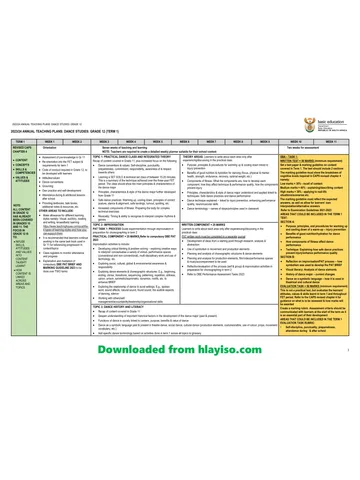
Related documents
Matched using subject, grade, language, document type and exam metadata.
More from Grade 12 Dance Studies
Explore more published documents in this catalogue.