
Study & Master
Support Pack | Grade 11
CAPS
Geography
Resources and sustainability –
geographical knowledge
This support pack for the Resources and sustainability –
geographical knowledge module in the Geography Grade 11 CAPS
curriculum provides valuable revision activities. All activities have the
answers provided. Learners can work through these individually at home
or these could form the basis of a catch-up class or online lesson. You
have permission to print or photocopy this document or distribute it
electronically via email or WhatsApp.
For more information on our Study & Master CAPS-approved
textbooks and valuable resource materials, visit
www.cambridge.org
Brighter Thinking | Better Learning
Skip to contentStudy guide 
View all
GEO 11 Support Pack for Resources and sustainability geographical knowledge
Grade 11 Geography study guide, 9 pages. Read online or get the free PDF download.
Publisher: Study & Master
Geography · Grade 11. Study guide, 9 pages. Read online or download the PDF.
- Subject
- Geography
- Grade
- Grade 11
- Document type
- Study guide
- Publisher
- Study & Master
- Curriculum
- CAPS
- Pages
- 9
- File size
- 1.0 MB
Loading document…
Loading document…
1 of 9
Document textSearch extracted text and jump to a page.
Resources and sustainability – geographical knowledge
QUESTION 1
Choose the correct underlined word/words for each
statement. Write down the question number and the
underlined word/words only.
1. The following is not a natural resource: air/water/
iron ore/capital.
2. The general term for a country becoming more
prosperous is industrial development/agricultural
development/economic development/population
increase.
3. Depletion means to become greater/to become less/
to grow faster/to grow slower.
4. Rill erosion is usually the forerunner of wind/
Figure 1
gully/sheet/ice erosion.
5. Typically, soil takes days to weeks/months to years/ QUESTION 3
years to hundreds of years/hundreds of years to Choose whether the statement is True or False. Write
thousands of years to form. (5×2) down the question number and ‘T’ or ‘F’ only.
[10] 1. An organic soil horizon is identified using the
QUESTION 2 letter O.
1. Define the term ‘resource’. 2. Heavily leached soil results in the formation of a
2. Say which of the following are not renewable B horizon.
resources: air, water, soil, iron ore, staple crops, 3. Hydro-electricity is South Africa’s main source
petroleum, natural gas, domestic animals, copper. of energy.
3. Explain why natural resources alone do not result 4. Solar panels on houses can help solve the problem
in economic development. of high domestic electricity consumption.
4. How does the exploitation of natural resources 5. When coal is burnt, carbon dioxide is released
lead to their depletion? into the atmosphere. (5×1)
5. List five examples of depletion or exploitation of [5]
resources, and give a possible consequence for QUESTION 4
each. Copy the unlabelled diagram on the next page
6. What is meant by sustainability, and how can it be (Figure 2) into your notebook and follow the
put into practice with regard to the world’s natural instructions below.
resources? 1. Look for an exposed soil profile in your area. See
7. In what way is this woman (Figure 1) using, how many different layers (horizons) you can
rather than abusing, a resource? (Hint: glass make out. Show these on the diagram. Hint 1:
is made from sand, and it takes energy to Take a few photographs with your cell phone or
manufacture glass.) camera, as you can then refer to these later on if
8. Give Figure 1 a suitable caption. you need to. Hint 2: The easiest way to distinguish
9. What else suggests that the woman is aware of the (identify) different horizons is on the basis of:
value of natural resources? (Hint: What is her bag • obvious changes in colour
made of?) [26] • obvious changes in texture (sandy soil will
look, and feel, different to clay soil)
• the presence of stones or gravel, or bits of
rock in the soil
• plant roots in the soil.
S T U DY & M A S T E R R e s o u r c e s a n d s u s t a i n a b i l i t y – g e o g r a p h i c a l k n ow l e d g e 1
If you cannot find an exposed profile (building Statement Coal-fired Nuclear Hydro
sites and road cuttings are good places to look)
major contributor to air
you can try digging a soil inspection pit. Make
pollution
sure you choose a good site (no stones, as little
clean, but very
vegetation as possible, good depth of soil) and do
controversial for
the same exercise. Alternatively, you can use the perceived safety
photograph (Figure 3) on the left. reasons
2. Provide the diagram (Figure 2) with a suitable Gariep Dam is
caption. associated with this
3. Outline the management strategies that can be type
used to prevent and control soil erosion. most power stations
4. Why is soil erosion of concern: are on the Highveld
a) at a global scale there is only one of this
b) at a local (South African) scale? kind in SA
the new Medupi
station is of this type
Eskom plans one of
these stations for
somewhere on the
coast
definitely the most
renewable of the three
2. Read the three nuclear power accident case
studies above and try to identify:
a) what the accidents had in common
b) what the differences were between the three
accidents
c) which, in your opinion, was the unluckiest
accident, and why.
3. ‘With all its coal, South Africa should not even be
considering other electricity generation types.’ Do
Figure 2 Figure 3 A soil profile you agree? Explain. [18]
[20]
QUESTION 5 QUESTION 7
Outline and briefly discuss some of the management Discuss the role of nuclear power in South Africa,
strategies that can be applied to control soil including its advantages and disadvantages, and its
erosion. [10] possible role in the future. Mention the bad press that
nuclear power has received. [10]
QUESTION 6
1. Look at the following statements and mark the QUESTION 8
box under the type of electricity generation that 1. Define non-conventional sources as applied to
best fits the statement. electricity generation.
2. Look at the following statements. Match the
Statement Coal-fired Nuclear Hydro statement in Column B to the one in Column A.
most important type of
electricity generation Column A Column B
in SA a) SA White Paper on A. Kalkbult, Northern Cape
least important (other Energy Policy 2003
than a few localised b) nuclear power B. emission responsible for
generating types) of atmospheric warming
electricity generation
c) solar panels C. aesthetically unpleasing
in SA
2 S T U DY & M A S T E R S U P P O R T PA C K
Column A Column B
3. In your own words, explain what you understand by
the term sustainability when it comes to:
d) SA’s first solar D. consumes huge amounts of
• energy (electricity) production
photovoltaic plant electricity
• energy (electricity) consumption.
e) carbon dioxide E. insignificant in SA
4. This graph in Figure 3 shows a hypothetical situation
f) aluminium smelting F. sell electricity to Eskom with regard to population growth and energy
g) SESSA G. becoming more costly than (electricity) consumption in two countries, A and B.
many non-conventional
The comparisons are relative, which is why no actual
sources
figures are given. Study the graph, and then answer
h) disadvantage of wind H. Sustainable Energy Society
the questions that follow.
farms South Africa
a) Which is a developed country, and which is a
i) geothermal energy I. deliver 10 000 gigawatt
developing country? Explain.
hours of non-conventional
energy by 2013 b) In which country has electricity consumption
j) independent power J. ideal for home installation
increased the most? Why?
producers for hot water c) Has electricity consumption in the other
country increased or decreased? Whatever
3. Explain briefly why non-conventional energy the trend is, explain it.
sources could be especially useful in rural d) How, do you think, do the economies of
South Africa. [25] countries A and B differ?
e) If you had to draw in lines for South Africa,
QUESTION 9 where would you put them? [32]
Define:
1. soil profile
2. soil horizon
3. exploitation
4. carbon footprint
5. environmentally friendly (5×2)
Electricity consumption
[10]
Population
QUESTION 10
Give the opposite, or opposite term, usually paired or
associated with each of the following when dealing
with energy and electricity production. You can also
A
give an example where necessary: A
1. sustainable B
B
2. energy efficient 1960 1970 1980 1990 2000 2010 2020
3. conventional energy source Years
4. electricity production Country A Country B
population population
5. green economy (5×1) electricity electricity
[5] consumption consumption
QUESTION 11
1. What, do you think, is meant by energy Figure 5 Population growth and electricity consumption
for countries A and B
management?
2. Briefly explain the responsibilities of the following
role players towards energy management in South [Total: 171 marks]
Africa:
a) the State (government)
b) business
c) individuals
S T U DY & M A S T E R R e s o u r c e s a n d s u s t a i n a b i l i t y – g e o g r a p h i c a l k n ow l e d g e 3
Answers
QUESTION 1 (per person) use of energy, raw materials, consumer
1. capital ✓✓ goods, and even food. ✓✓ As living standards in
2. economic development ✓✓ Asia improve, there is a demand for more meat
3. to become less ✓✓ and dairy products, as well as motor cars and
4. gully ✓✓ expensive luxury goods. The result is an impact on
5. hundreds of years to thousands of years ✓✓ (5×2) the environment, which sustains and delivers these
[10] resources. Can you see the irony and contradiction
QUESTION 2 in the following cartoon? ✓
1. A resource is anything, from raw materials,
to energy, to labour, to capital, which is used Hey, you! We need that
to sustain human life, and to foster economic tree to protect us from
the greenhouse effect!
development. Resources are often classified as
renewable and non-renewable. ✓✓
2. soil (if it is abused), ✓ iron ore, ✓ petroleum, ✓
natural gas, ✓ copper ✓
3. Because, without the capital and the know-how
(skilled labour) all that a country can do is to
export its natural resources. ✓ This is the problem
with much of Africa. If resources can be mined,
or harvested and then processed in the country ✓
that produces them, economic growth will occur.
4. Simply because the resource is not being
replaced. ✓ There is a finite amount of any non-
7. The woman is recycling glass. This will need to be
renewable resource. ✓ Once it is used up, it is
melted down to make new glass products, but it
gone forever. ✓ Petroleum (oil) and other fossil
does save on having to mine more glass-quality
fuels are very good examples. ✓
silica sand. Note the woman’s ‘green’ recyclable
5. • Fossil fuels are being rapidly consumed
bag, rather than a plastic bag. ✓✓
(used for energy, motor vehicles) and can’t be
8. Using resources wisely; recycling glass; or any
replaced because they take millions of years
similar caption which suggests sustainable use
to renew. ✓
of resources. ✓
• Soil is exploited by bad farming methods,
9. She is using a ‘green’ bag made of recycled
slashing down of forests, and trying to
material. The bag can be used over and over.
produce crops on unsuitable land. Soil can
Note that the bag is not made out of plastic. This
replace itself, but this takes a long time. ✓
woman takes her own bags when she goes
• Air pollution (smoke, carbon dioxide and
shopping. ✓✓[26]
other gases) adds particulate matter and
unwanted gases to the atmosphere. ✓
QUESTION 3
• The oceans are being exploited by overfishing,
1. T ✓
and by severe pollution. ✓
2. F ✓ (It is an E horizon.)
• Ground water is poisoned and contaminated.
3. F ✓ (Coal [thermal] is the main source.)
Fracking for gas in the Karoo could increase
4. T ✓
this problem. ✓
5. T ✓ (5×1)
6. Sustainability means using and consuming less, and
[5]
using what we have wisely. The world simply cannot
sustain the standard of living enjoyed by people in
developed countries. This is in terms of per capita
4 S T U DY & M A S T E R S U P P O R T PA C K
QUESTION 4 of the veld. Management of gullies by filling
them in, and stabilising them with vegetation can
O help prevent further erosion. ✓ Planting trees to
A
use excess water can help protect soil, but this
must be done very carefully to avoid unintended
E consequences such as the trees using up all the
available water. ✓
B 4. a) Because of the need for sustainable farming
and crop production to feed a growing world
population. ✓ We cannot afford to lose more
topsoil, particularly if climate change is going
C to impact on what can be grown where. ✓
b) South Africa is a dry country, with limited soil
and crop producing resources. ✓ The country
R is also vulnerable to both wind and water
not visible
on this profile
erosion. ✓ The geology and relief of South
Africa also encourage erosion in many places.
Because we also need to maintain sustainable
1. The answers to question 1 are based on what crop production, soil erosion is an issue of
you find in the field. When identifying horizons, concern. ✓ ✓ [20]
look for:
• obvious changes in colour QUESTION 5
• obvious changes in texture (sandy soil will The best management strategy for controlling soil
look, and feel, different to clay soil) erosion is to prevent it from happening in the first
• the presence of stones or gravel, or bits of place. ✓ The following can help to prevent soil erosion,
rock in the soil or limit its impacts. Most of them are sustainable
• plant roots in the soil. ✓✓ farming practices: contour ploughing (ploughing
2. Suitable caption for the above: Soil profile and its parallel to the slope, rather than up and down the
various horizons ✓ slope) ✓ prevents water from running straight
3. The best management strategy for controlling down the slope and causing sheet or rill erosion. ✓
soil erosion is to prevent it happening in the first Windbreaks are rows of trees, or tall grass or bush, which
place. ✓ The following can help to prevent soil help to break the erosive power of the wind blowing
erosion, or to limit its impacts. ✓ Most of them across a field. ✓ Crop rotation involves resting the
are sustainable farming practices. ✓ Contour soil, by planting a different crop type with different
ploughing (ploughing parallel to the slope, rather demands on the soil’s nutrients, or even leaving a field
than up and down the slope) prevents water from fallow (no crop) for a season or two. ✓ Preventing
running straight down the slope and causing sheet overgrazing, by not keeping too many animals on the
or rill erosion. ✓ Windbreaks are rows of trees, or land, can help protect vegetation, which binds the
tall grass or bush, which help to break the erosive soil. ✓ Providing more watering points for animals
power of the wind blowing across a field. ✓ Crop helps, as animal concentrations lead to trampling of
rotation involves resting the soil, by planting a the veld. ✓ Management of gullies by filling them in,
different crop type with different demands on the and stabilising them with vegetation can help prevent
soil’s nutrients, or even leaving a field fallow (no further erosion. ✓ Planting trees to use excess water
crop) for a season or two. Preventing overgrazing, can help protect soil, ✓ but this must be done very
by not keeping too many animals on the land, ✓ carefully to avoid unintended consequences such as
can help protect vegetation, which binds the soil. the trees using up all the available water. ✓ [10]
Providing more watering points for animals ✓
helps, as animal concentrations lead to trampling
S T U DY & M A S T E R R e s o u r c e s a n d s u s t a i n a b i l i t y – g e o g r a p h i c a l k n ow l e d g e 5
QUESTION 6 those who are against nuclear power (mainly
1. because of its perceived risks). Whatever your
Statement Coal- Nuclear Hydro point of view, you must be able to support
fired your opinion. ✓ [18]
most important type of X✓
electricity generation in SA QUESTION 7
least important (other than X✓ Nuclear power is the most controversial power
a few localised generating source. ✓ This is because of the idea that nuclear means
types) of electricity radioactive, and that it is potentially very dangerous. ✓
generation in SA However, nuclear power has many advantages. ✓ It is
major contributor to air X✓ sustainable, as there is no shortage of nuclear fuel. ✓ It
pollution therefore saves on valuable non-renewable fossil fuel
clean, but very X✓ such as coal, and it reduces carbon emissions, and does
controversial for perceived not directly contribute to global warming. ✓ It is clean
safety reasons and efficient. ✓ However, as the accidents at Three Mile
Gariep Dam is associated X✓ Island, Chernobyl and Fukushima have shown, it is
with this type
potentially hazardous. ✓ If something goes wrong, there
most power stations are on X ✓ is a potential for radioactive contamination. ✓ Disposal
the Highveld
of spent nuclear fuel is an important issue. ✓ Nuclear
there is only one of this X✓ power stations are very expensive to build and need
kind in SA
specialist maintenance and know-how to run. ✓ [10]
the new Medupi station is X✓
of this type
QUESTION 8
Eskom plans one of these X✓ 1. Non-conventional electricity energy sources are
stations for somewhere on
the coast those outside the big three of thermal (coal- or
oil- or gas-fired power stations), nuclear power
definitely the most X✓
renewable of the three and hydro-electric power. ✓ Note that both
thermal and nuclear power stations rely on the
2. a) The accidents at Three Mile Island, Chernobyl generation of heat to produce steam to drive
and Fukushima had in common that, because turbines to produce electricity. ✓ With hydro-
they were nuclear power plants, they were electric power, the force of running water turns
treated (correctly) as emergencies. There was the turbines. ✓ Non-conventional sources involve
also great public interest and publicity. All solar power and wind energy. ✓ Ocean tides can
three occurred in developed countries. ✓✓ also be used to generate power, and so can heat
b) The big difference was the radiation and from thermal springs and underground water
contamination of the environment from (geothermal sources). ✓ However, these sources
Chernobyl, which was a catastrophe. Three are not available everywhere. ✓
Mile Island had the necessary controls, and 2.
the technology was such that the accident Column A Column B
could be comfortably controlled. Chernobyl a) SA White Paper on I. deliver 10 000 gigawatt ✓
resulted in a reactor meltdown (uncontrolled Energy Policy 2003 hours of non-conventional
nuclear fission). Fukushima was entirely the energy by 2013
result of a natural disaster, while Chernobyl b) nuclear power G. becoming more costly ✓
involved dated technology, and human than many non-
error. ✓✓ conventional sources
c) Definitely Fukushima. Where it was designed c) solar panels J. ideal for home installation ✓
for a 6-metre tsunami wave, the tsunami for hot water
wave was closer to 15 metres in height. ✓✓ d) SA’s first solar A. Kalkbult, Northern Cape ✓
photovoltaic plant
3. This is an open-ended question, where those in
favour of nuclear power (mainly for economic e) carbon dioxide B. emission responsible for ✓
atmospheric warming
reasons, and clean power), will disagree ✓ with
6 S T U DY & M A S T E R S U P P O R T PA C K
energy source (for example, wind power, and
Column A Column B
photovoltaic cells) ✓
f) aluminium smelting D. consumes huge amounts ✓ 4. electricity production – electricity consumption
of electricity
(which is what our economy, and we as
g) SESSA H. Sustainable Energy ✓ individuals, do) ✓
Society South Africa
5. green economy – dirty or wasteful economy (see
h) disadvantage of wind C. aesthetically unpleasing ✓
answers 1 and 2 above) ✓ (5×1)
farms
[5]
i) geothermal energy E. insignificant in SA ✓
QUESTION 11
j) independent power F. sell electricity to Eskom ✓ 1. Planning the production and supply of electricity
producers
now, and in the future, in a sensible way, such that
3. South Africa is a developing country. ✓ It is also demands are met and the environment is cared
a very large country. ✓ This means that putting in for. ✓✓
infrastructure such as power lines and substations 2. a) The state should:
is very expensive. ✓ Most electricity is used in • encourage the use of wind and solar
the urban and industrial areas. ✓ This means energy ✓
that rural areas are the last to be electrified. ✓ • evaluate the direct and indirect effects of
However, rural users want, and need, electricity. ✓ non-conventional energy in relation to
Electricity is also key to rural development. ✓ the current use of conventional energy ✓
Non-conventional sources, such as solar panels, • monitor environmental damage and the
and even photovoltaic cells and wind turbines, implementation of conventional energy
can possibly be erected or installed close to the resources ✓
communities they are designed to serve. ✓ This • promote awareness and education
means it will not be necessary to bring power via amongst South Africans ✓
an electricity grid from far away. ✓ [25] • promote incentives and rebates for the
use of non-conventional energy ✓
QUESTION 9 • create an atmosphere to attract local and
1. soil profile: the complete cross-section from the foreign investment in non-conventional
soil surface down to bedrock, typically exposed energy sources. ✓
by gully erosion, or by digging, or in road b) Businesses should be concerned with issues
cuttings ✓✓ such as:
2. soil horizon: a distinct layer within the soil profile; • what their carbon footprint is ✓
a series of horizons (O, A, E, B, C, R) typically • how green their products and services
makes up a soil profile ✓✓ are ✓
3. exploitation: to use (or misuse) something • how much energy the business uses ✓
without any regard to its well-being or • in what ways the business can improve
sustainability ✓✓ resource use and efficiency ✓
4. carbon footprint: the amount of atmospheric • where the business sources materials
carbon used or ‘left behind’ by a person, a vehicle, from ✓
a particular industry, or even a whole country ✓✓ • the use of sustainable products and
5. environmentally friendly: production and processes ✓
consumption of goods, and economic • how the business impacts on the local
development, with due regard to the well-being of and global community ✓
the environment, natural and built ✓✓ (5×2) • in what ways the business can set goals
[10] for improvement and make themselves
QUESTION 10 more efficient ✓
1. sustainable – unsustainable (wasteful production • the level of education of employees
and consumption) ✓ and their engagement with energy and
2. energy efficient – energy inefficient (think of environmental issues. ✓
traditional versus long-life light bulbs) ✓
3. conventional energy source – non-conventional
S T U DY & M A S T E R R e s o u r c e s a n d s u s t a i n a b i l i t y – g e o g r a p h i c a l k n ow l e d g e 7
c) You, as an individual can: not be aware of ways in which electricity
• be involved in local environmental is often wasted. Timers on hot water
projects which educate and inform geysers help save electricity. Simple things
individuals and increase awareness like not boiling a full kettle for one cup
about the importance of energy resource of coffee contribute to sustainable use ✓
management ✓ of electricity.
• be part of community forums consulting 4. a) Country A is a developed country, and
with communities so that everyone is Country B is a developing country. ✓ The
involved in problem solving around main indicator is the low population growth
energy resource management ✓ for A and the high increase for B. ✓
• be involved in empowering yourself, b) Country A, presumably as economic
and others, by getting involved in development has taken place. ✓
local, grassroots resource management c) In country B, electricity consumption has
projects ✓ also increased, but only slightly, probably as
• promote and enhance greener a result of the population growth, rather than
economies, for example, by encouraging large-scale economic development. ✓
friends and family to buy locally made, d) Country A is a developed country, with
environmentally friendly products, to minimal population increase, but with a
use environmentally friendly devices in strong, growing economy, which demands
their homes, and to use a mix of energy more electricity. Country B is typical of
sources. ✓ a developing country in Africa. There is
3. • Sustainable electrical energy is electricity positive population growth, and some
produced with due regard to the increased demand for electricity, but no real
environment, and the long-term well- growth in demand. ✓
being of resources such as coal. It involves e) Somewhere between A and B, with regard
research into new technology and new (non- to both population increase and electricity
conventional) forms of energy production. ✓ demand. South Africa’s population is
• Sustainable electricity consumption simply still increasing. But electricity demand
means using energy in a responsible way. ✓ is increasing greatly. This is as a result of
This applies to big business, local authorities some economic growth, but also because of
(leaving street lights burning during the South Africa’s electrification programme,
day) and domestic use. ✓ Electricity is particularly in disadvantaged communities. ✓
expensive, so most people are careful about [32]
electricity use. ✓ However, some people may [Total: 171 marks]
8 S T U DY & M A S T E R S U P P O R T PA C K
Study this subject
Notes, quizzes and topic questions for Grade 11 Geography.
- Grade 11 Geography notes
CAPS revision notes with worked examples.
- Geography questions by topic
Past exam questions sorted by CAPS topic, with memos where available.
- Grade 11 Geography quizzes
Short topic quizzes with instant feedback.
- All Grade 11 Geography past papers
Past papers by year, with memos where available.
- Grade 11 Study guides
More Geography and other subjects in this collection.
Recommended for this subject
More papers and memos for this grade and subject.
Memorandum
Geography Grade 11 Paper 1 Eastern Cape November 2025 Memo
Memorandum
Geography Grade 11 P2 Eastern Cape November 2025 Memo (English)
Question paper
Geography Grade 11 P1 Eastern Cape November 2025 Question Paper
Question paper
Geography Grade 11 P2 Eastern Cape November 2025 Question Paper
Question paper and memo
Geography Grade 11 Free State March Test 2025 Paper & Memo
Memorandum
Geography Grade 11 Paper 1 Eastern Cape November 2024 Memo
Related documents
Question paper
Geography Grade 11 P2 Eastern Cape November 2024 QP (Eng)
Question paper
Geography Grade 11 P2 North West November 2024 QP (Eng)
Memorandum
Geography Grade 11 P1 Eastern Cape November 2023 Memo (English)
Question paper
Geography Grade 11 P2 Eastern Cape November 2023 QP (Afr)
Question paper
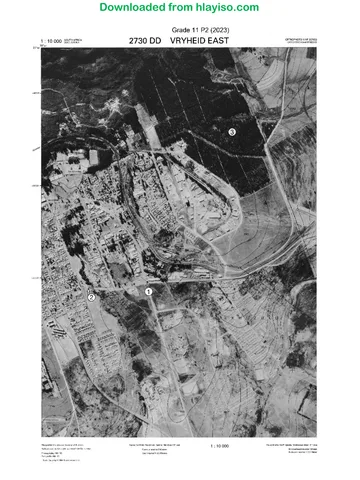
Geography Grade 11 MAPS 2023 Question Paper
Question paper
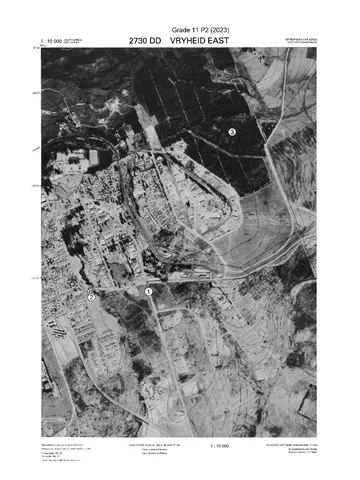
Geography Grade 11 MAPS 2023 Question Paper
More from Grade 11 Geography
Question paper
Geography Grade 11 Paper 2 MAPS 2023 Question Paper
Question paper
Geography Grade 11 Paper 2 MAPS 2023 Question Paper
Question paper
Geography Grade 11 Paper 2 MAPS 2023 Question Paper
Memorandum
Geography Grade 11 P1 Eastern Cape November 2022 Memo (English)
Memorandum
Geography Grade 11 P2 Eastern Cape November 2022 Memo (Afrikaans)
Memorandum