
PROVINCIAL ASSESSMENT
GRADE
PROVIL 10
ASSESSMENT
ECONOMICS P1
JUNE 2024
MARKS: 100
TIME: 1 ½ hours
This question paper consists of 9 pages.
Copyright reserved Please turn over
Skip to contentQuestion paper %20June%202024%20Question%20Paper_hlayiso.com_--cca5a2fb-d2a8-4291-8b77-27df39ea4aa7/v1-4c0475169b2ed69e075d/card.webp)
%20June%202024%20Question%20Paper_hlayiso.com_--6c40d10f-82fe-43f3-bea3-c9d464a800ff/v1-a2a9af5a64558783eb27/card.webp)
%20June%202023%20Question%20Paper_hlayiso.com_--beebfd9d-585c-4946-84b2-076ca337c9d0/v1-56258646d0153f729061/card.webp)
%20June%202024%20Possible%20Answers_hlayiso.com_--2e8a22fb-f428-4bd0-8ef5-1d0feef1fa94/v1-5027dac0c665104a0589/card.webp)
%20June%202024%20Possible%20Answers_hlayiso.com_--c23085d5-738d-46b4-b878-072af26bc958/v1-558d489c211516dacbc1/card.webp)
%20June%202023%20Question%20Paper_hlayiso.com_--8a5941c9-4df9-4162-8a37-3ec5143411d9/v1-762f2b775015f297bbad/card.webp)
%202023%20Question%20Paper_hlayiso.com_--1a33256c-e3d0-4b9d-9d9d-1dcdda7ac5ab/v1-3fbd995cb38f94256040/card.webp)
%20June%202022%20Question%20Paper_hlayiso.com_--5f5a8c12-c75c-4de4-a0df-4bdd8362d8e1/v1-57c07c7f2ed564398198/card.webp)
%20June%202022%20Question%20Paper_hlayiso.com_--5334e44f-418f-4d66-8c2b-a05d4703e014/v1-533c85993a425b7a4f2c/card.webp)
View all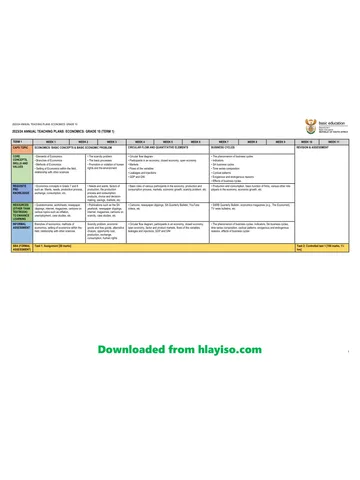
%20June%202024%20Possible%20Answers_hlayiso.com_--6510048d-9b76-4cdc-ac94-b3b211d47d8b/v1-52e7289b8d86e1dff0a2/card.webp)
%20June%202023%20Possible%20Answers_hlayiso.com_--fb015450-42a2-4b1a-9c84-60032bd6acca/v1-21dd27671589dce17625/card.webp)
%20June%202023%20Possible%20Answers_hlayiso.com_--11295fb7-f85e-4c3b-a272-dc3b895ef1e0/v1-6af73504f128f579fb3f/card.webp)
%20June%202023%20Possible%20Answers_hlayiso.com_--cdbef21d-0955-491b-a1e3-f2ce7d98b24a/v1-2e97d3a4129d4c0adc26/card.webp)
Economics Grade 10 Paper 1 North West June 2024 Question Paper
Grade 10 Economics Paper 1 question paper from the North West June Exam 2024, 9 pages. Read online or get the free PDF download, memo linked when available.
Economics · Grade 10 · North West June Exam · 2024. Question paper, 9 pages. Read online or download the PDF.
- Subject
- Economics
- Grade
- Grade 10
- Document type
- Question paper
- Year
- 2024
- Exam period
- North West June Exam
- Paper
- 1
- Curriculum
- CAPS
- Pages
- 9
- File size
- 666.6 KB
Loading document…
Loading document…
1 of 9
Document textSearch extracted text and jump to a page.
Economics/P1 2 NW/June 2024
Grade 10
INSTRUCTIONS AND INFORMATION
1. Answer THREE questions as follows in the ANSWER BOOK:
SECTION A: COMPULSORY
SECTION B: Answer any ONE of the two questions.
SECTION C: Answer ONE of the two questions.
2. Answer only the required number of questions. Answers in excess of
the required number of the required number will NOT be marked.
3. Number the answers correctly according to the numbering system used
in this question paper.
4. Write the question number above each answer.
5. Read the questions carefully.
6. Start EACH question on a NEW page.
7. Leave 2–3 lines between subsections of questions.
8. Answer the questions in full sentences and ensure that the format,
content and context of your responses comply with the cognitive
requirements of the questions.
9. Use only black or blue ink.
10. You may use a non-programmable pocket calculator.
11. Write neatly and legibly.
Copyright reserved Please turn over
Economics/P1 3 NW/June 2024
Grade 10
SECTION A (COMPULSORY)
QUESTION 1 20 MARKS – 20 MINUTES
1.1 Various options are provided as possible answers to the following questions. Choose
the answer and write only the letter (A–D) next to the question number (1.1.1 to 1.1.5)
in the ANSWER BOOK, e.g. 1.1.6 D
1.1.1 Which one of the following does NOT fall within the economics
field of study?
A Scarce resource
B Choice
C What people should
buy
D Opportunity cost
1.1.2 The term that best describes the fact that people have unlimited needs
and wants, with limited resources to satisfy them is …
A the economic problem.
B abundance.
C factors of production.
D the branches of economics.
1.1.3 The basic problem faced by all nations is ...
A consumption.
B scarcity.
C distributions.
D production.
1.1.4 The primary participant in the circular flow of an open economy is called
the … sector.
A households
B business
C government
D foreign
1.1.5 The business cycle phase that is associated with rising profits and
consumption is called …
A trough.
B downswing.
C peak.
D prosperity. (5 x 2) (10)
Copyright reserved
Economics/P1 4 NW/June 2024
Grade 10
1.2 Choose a description from COLUMN B that matches the item in COLUMN A. Write
only the letter (A–F) next to the question numbers (1.2.1 to 1.2.5) in the ANSWER
BOOK, e.g. 1.2.6 G.
COLUMN A COLUMN B
1.2.1 Equitability A a process of using up an article
1.2.2 Secondary sector B the sector that manufactures and
processes raw materials so that
they are in a form fit for human
consumption
1.2.3 Consumption C ensures that the benefits of
society`s resources are distributed
fairly among society members
1.2.4 Boom D the economic indicator that moves
the same way that the economy
does
1.2.5 Coincident indicator E the period of very high economic
activity just before the economy
slows down
F the sector that render services to
make the product available to
consumers
(5 x 1) (5)
1.3 Give ONE term for each of the following descriptions. Write only the term next to the
question numbers (1.3.1 to 1.3.5) in the ANSWER BOOK. Abbreviations, acronyms
and examples will NOT be accepted.
1.3.1 All the physical and mental efforts of human activities involved in the
production of goods and services
1.3.2 When someone has the means and resources to buy a product but
there is no supply of that product
1.3.3 The type of economy where the foreign sector is excluded
1.3.4 The economic sector responsible for converting raw materials and other
inputs into finished products
1.3.5 The lowest turning point of the business cycle (5 X 1) (5)
TOTAL SECTION A: 20
Copyright reserved Please turn over
Economics/P1 5 NW/June 2024
Grade 10
SECTION B
Answer only ONE of the two questions in this section ANSWER BOOK
QUESTION 2: MACROECONOMICS 40 MARKS – 30 MINUTES
2.1 Answer the following questions:
2.1.1 List any TWO examples of injections in the economy. (2 X 1) (2)
2.1.2 Why do economists make use of models in the study of (1 X 2) (2)
economics?
2.2 Study the cartoon below and answer the questions that follow:
[Adapted from www.google.com]
2.2.1 What advice is given by the lady in the cartoon? (1)
2.2.2 Give ONE career opportunity related to Economics. (1)
2.2.3 Briefly describe the term Economics. (2)
2.2.4 Why is Economics considered to be a social science? (2)
2.2.5 How does macroeconomics differ from microeconomics? (2 x 2) (4)
Copyright reserved Please turn over
Economics/P1 6 NW/June 2024
Grade 10
2.3 Study the table below and answer the questions that follow.
NATIONAL INCOME ACCOUNTS OF SOUTH AFRICA
R millions
2020 2021
Compensation of employees 2 678 050 2 861 309
Net operating surplus 1 493 978 1 795 000
Consumption of fixed capital 752 613 797 230
Gross value added at factor cost 4 924 641 5 453 539
Other taxes on production 118 022 131 563
Other subsidies on production 13 088 12 494
Gross value added at A 5 029 575 5 572 608
Taxes on products 541 457 633 854
Subsidies on products 14 116 13 965
Gross domestic product at market prices 5 556 916 B
[Adapted from SARB QB, December 2021]
2.3.1 Identify the method used in the table above to calculate
national income. (1)
2.3.2 Name the missing item labelled as A. (1)
2.3.3 Briefly describe the term subsidies on production. (2)
2.3.4 How is gross domestic product converted to gross national (2)
product?
2.3.5 Calculate the value of gross domestic product at market
prices for 2021 (B). Show ALL calculations. (2 X 2) (4)
2.4 Differentiate between positive and normative statements. (8)
2.5 How can the business sector contribute more positively to the
economy? (4 X 2) (8)
[40]
Copyright reserved Please turn over
Economics/P1 7 NW/June 2024
Grade 10
QUESTION 3: MACRONOMICS 40 MARKS – 30 MINUTES
3.1 Answer the following questions:
3.1.1 List any TWO types of pollution. (2 x 1) (2)
3.1.2 What happens during the depression phase? (1 X 2) (2)
3.2 Study the picture below and answer the questions that follows.
[Adapted from www.google.com]
3.2.1 Identify the human right violated in the above cartoon. (1)
3.2.2 What is the legal age for one to be considered for formal
employment? (1)
3.2.3 Briefly describe the term human rights. (2)
3.2.4 How can local communities contribute to a cleaner (2)
environment?
3.2.5 How can the government help to intervene in protection of
human. (2 x 2) (4)
Copyright reserved Please turn over
Economics/P1 8 NW/June 2024
Grade 10
3.3 Study the picture below and answer the questions that follow.
[Adapted from Core notes 202]
3.3.1 Identify the final product in the picture above. (1)
3.3.2 Name the economic sector that is responsible for the
extraction of raw materials from nature. (1)
3.3.3 Briefly describe the term consumer goods. (2)
3.3.4 Explain the positive impact of labour intensive towards the (2)
economic activity.
3.3.5 How does the informal sector differs from formal sector in (2 X 2) (4)
our economy.
3.4 Differentiate between free goods and economic goods . (2 X 4) (8)
3.5 Analyse the importance of the secondary sector in the economy? (4 X 2) (8)
[40]
TOTAL SECTION B: 40
Copyright reserved Please turn over
Economics/P1 9 NW/June 2024
Grade 10
SECTION C
Answer any ONE of the two questions in this section in the ANSWER BOOK.
Your answer will be assessed as follows:
STRUCTURE OF ESSAY MARK
ALLOCATION
Introduction
The introduction is a lower-order response. Max. 2
A good starting point will be to define the main concept related to the question
topic.
Do NOT include any part of the question in your introduction.
Do NOT repeat any part of the introduction in the body.
Avoid mentioning in the introduction what you are going to discuss in the body.
Body
Main part: Discuss in detail/In-depth discussion/Examine/Critically Max. 26
discuss/Analyse/Compare/Evaluate/Distinguish/Differentiate/Explain/
Assess/Debate
A maximum of 8 marks may be allocated for headings/examples.
Additional part: Critically discuss/Evaluate/Critically evaluate/ Max. 10
Deduce/Compare/Distinguish/Suggest/Interpret/Debate/How
A maximum of 2 marks may be allocated for merely listing facts.
Conclusion
Any higher-order conclusion should include:
A brief summary of what has been discussed without repeating facts already Max. 2
mentioned
Any opinion or valued judgement on the facts discussed.
Additional supporting information to strengthen the Discussion/
analysis
A contradictory viewpoint with motivation, if required
Recommendation
TOTAL 40
QUESTION 4: MACROECONOMICS 40 MARKS – 40 MINUTES
Discuss in detail the role of the FOUR markets in a circular flow of an open economy. (26)
Why is an increase in injections important for the South African economy? (10)
[40]
QUESTION 5: MACROECONOMICS 40 MARKS – 40 MINUTES
Discuss in detail the features of business cycles. (26)
Explain how endogenous (Keynesian) factors influence economic fluctuation. (10)
[40]
TOTAL SECTION C: 40
GRAND TOTAL: 100
Copyright reserved
Study this subject
Revise the topics in this paper, then practise them question by question.
- Grade 10 Economics notes
CAPS revision notes with worked examples.
- Economics questions by topic
Past exam questions sorted by CAPS topic, with memos where available.
- Grade 10 Economics quizzes
Short topic quizzes with instant feedback.
- All Grade 10 Economics past papers
Past papers by year, with memos where available.
- Grade 10 past papers
More Economics and other subjects in this collection.
Recommended for this subject
More papers and memos for this grade and subject.
Question paper
Economics Grade 10 P2 Gauteng June 2024 Question Paper (Afr)
Question paper
Economics Grade 10 P2 Gauteng June 2024 Question Paper (English)
Question paper
Economics Grade 10 P2 North West June 2024 Question Paper (Eng)
Question paper
Economics Grade 10 P2 North West June 2024 Question Paper (Eng)
Question paper
Economics Grade 10 P2 North West November 2024 QP (Afr)
Question paper
Economics Grade 10 P1 Gauteng June 2023 Question Paper (Afr)
Related documents
Memorandum
Economics Grade 10 Paper 1 Gauteng June 2024 Memo (Afrikaans)
Memorandum
Economics Grade 10 Paper 1 Gauteng June 2024 Memo (English)
Question paper
Economics Grade 10 P1 Gauteng June 2023 Question Paper (English)
Question paper
Economics Grade 10 P1 Gauteng November 2023 Question Paper (Eng)
Question paper
Economics Grade 10 Paper 1 Gauteng June 2022 Question Paper
Question paper
Economics Grade 10 Paper 1 Gauteng June 2022 Question Paper
More from Grade 10 Economics
Annual teaching plan
Gr 10 Eco ATP 2023 24
Question paper and memo
Economics Grade 10 Limpopo March Test 2025 Paper & Memo
Memorandum
Economics Grade 10 Paper 2 Gauteng June 2024 Memo (Afrikaans)
Memorandum
Economics Grade 10 Paper 1 Gauteng June 2023 Memo (Afrikaans)
Memorandum
Economics Grade 10 Paper 2 Gauteng June 2023 Memo (Afrikaans)
Memorandum