e d and
is
Rev aligned
S
CAP
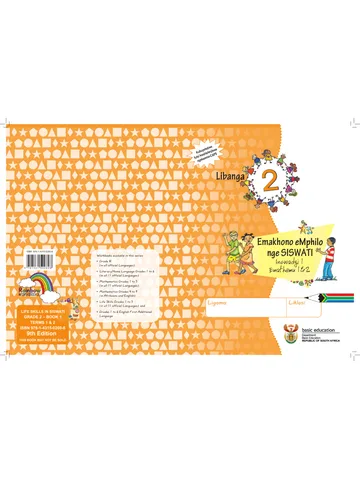
Grade
2
Life Skills
ISBN 978-1-4315-0252-3
Workbooks available in this series: in ENGLISH
9 781431 502523
• Grade R
(in all official Languages); Book 1
• Literacy/Home Language Grades 1 to 6
(in all 11 official Languages); Terms 1&2
• Mathematics Grades 1 to 3
(in all 11 official Languages);
• Mathematics Grades 4 to 9
(in Afrikaans and English);
• Life Skills Grades 1 to 3
(in all 11 official Languages); and
Name: Class:
LIFE SKILLS IN ENGLISH • Grades 1 to 6 English First Additional
GRADE 2 – BOOK 1 Language.
TERMS 1 & 2
ISBN 978-1-4315-0252-3
THIS BOOK MAY NOT BE SOLD.
9th Edition
Skip to contentQuestion paper 
View all
Life Skills Grade 2 Life Skills Exemplar Booklet Question Paper
Grade 2 Life Skills question paper from the Life Skills Exemplar Booklet, 70 pages. Read online or get the free PDF download, memo linked when available.
Life Skills · Grade 2 · Life Skills exemplar booklet. Question paper, 70 pages. Read online or download the PDF.
- Subject
- Life Skills
- Grade
- Grade 2
- Document type
- Question paper
- Exam period
- Life Skills Exemplar Booklet
- Curriculum
- CAPS
- Pages
- 70
- File size
- 19.8 MB
Loading document…
Loading document…
1 of 70
Document textSearch extracted text and jump to a page.
Contents
Term 1 Page Term 2 Page
1 We need healthy food to live... 2 17 The seasons ..........................34
2 Water gives us life ................... 4 18 The four seasons ...................36
3 We save water ......................... 6 19 About the seasons ................38
4 Clean air gives us energy ........ 8 20 Dressing for the weather .......40 Mrs Angie Motshekga, Mr Enver Surty,
Minister of Basic Deputy Minister
Education of Basic Education
5 Myself and others .................. 10 21 The effects of the seasons....42
These workbooks have been developed for the children of South
6 The people around us ........... 12 22 Growing a bean plant ............44
Africa under the leadership of the Minister of Basic Education,
Mrs Angie Motshekga, and the Deputy Minister of Basic
7 No more bullying ................... 14 23 Farm animals .........................46
Education, Mr Enver Surty.
8 Everyone is special................ 16 24 On the farm ............................48 The Rainbow Workbooks form part of the Department of Basic
Education’s range of interventions aimed at improving the
9 How we feel ........................... 18 25 Wild animals ..........................50 performance of South African learners in the first six grades.
As one of the priorities of the Government’s Plan of Action, this
10 People with disabilities ......... 20 26 How animals hide ..................52 project has been made possible by the generous funding of the
National Treasury. This has enabled the Department to make
11 All children are special .......... 22 27 Water animals ........................54 these workbooks, in all the official languages, available at no cost.
12 My hero .................................. 24 28 Creatures of the deep ...........55 We hope that teachers will find these workbooks useful in their
everyday teaching and in ensuring that their learners cover the
13 Water purification .................. 26 29 Animal craft ...........................56 curriculum. We have taken care to guide the teacher through
each of the activities by the inclusion of icons that indicate
Animals that carry their
14 A healthy lifestyle .................. 28 30 what it is that the learner should do.
homes with them ...................58
Perishable and non-perishable Animals that build themselves We sincerely hope that children will enjoy working through the
15 31
products................................. 30 shelters ..................................60 book as they grow and learn, and that you, the teacher, will
Religious and other special share their pleasure.
16 32 Dictionary ..............................62
days........................................ 32
We wish you and your learners every success in using these
workbooks.
Published by the Department of Basic Education
222 Struben Street ISBN 978-1-4315-0252-3
Pretoria
South Africa
This book may not be sold.
The Department of Basic Education has made every effort to trace copyright
© Department of Basic Education holders but if any have been inadvertently overlooked the Department will be
Ninth edition 2019 pleased to make the necessary arrangements at the first opportunity.
Grade 2
Life Skills
in ENGLISH
Book 1
This book belongs to:
1 We need healthy food
to live
o rk s h e et
Let’s read
W
1–
Our bodies need healthy food so that we can grow. We must eat some food
from each of the food groups every day. We need to eat healthy food so that
we will have enough energy to do everything we need to do. If we don’t eat
healthy food, we can become very ill.
1 – We e k
The five food groups
Te r m Grains and grain Vegetables and fruit
products
Some people
are vegetarians.
This means they do
not eat any meat.
They eat mainly from
the other 4 food
groups.
Meat,
fish, poultry, Dairy products
nuts and beans
Fats and oils
2 Date:
Date:
Talk to your friend about which of these
Let’s do
foods are healthy. Circle them.
Let’s write
Pretend you are going SHOPPING LIST
to the supermarket to
buy food for supper.
Make a shopping list
of foods that would be
healthy for your family
to eat.
r:
Teache
Sign:
Date:
3
2 Water gives us life
Let’s talk
o rk s h e et
Why do we need water?
W
1–
People, plants and animals
need water to stay alive.
It also helps our bodies to
remove waste products.
1 – We e k
Te r m
Every day we use water in our homes. Tell your friend about all the things you
Let’s do can think of that we use water for. Then draw 4 pictures to show how we use
water. Write a caption above each picture to explain what it is about.
______________________________________ ______________________________________
______________________________________ ______________________________________
4 Date:
Date:
Where do we get water from? Draw a line to
Let’s write
connect each word to the correct picture.
spring
windmill
river
dam
well
Do it outside
Before you do an activity outside, first stretch like a cat. This will make it
easier for your body to move. Also stretch after the activity to
relax and cool down. This will help you not to get pains in your
muscles. Now do these three activities.
• Jump like a frog. Make frog noises.
• Throw a ball or a bean bag to each other. Catch it.
• Then throw the ball or bean bag up high and catch it.
• Balance a bean bag on your head and have a walking Teache
r:
Sign:
race with your friend. See how long you can keep the
Date:
bag from falling.
5
3 We save water
Let’s talk
o rk s h e et
W
Water is very precious, so we should not waste it.
–
Talk to your friends about different ways in which
we can save water.
1 – We e k 2
Write two ideas for saving water
Let’s write
in the spaces below.
1. ______________________________________________________________________
Te r m
__________________________________________________________________________
2. __________________________________________________________________________
__________________________________________________________________________
Let’s do
Use your crayons
to make a colourful
poster about saving
water. Your poster
should encourage
others to save water.
When you’ve made
your poster, show it
to your friends.
6 Date:
Date:
Do it outside Let’s play the game “What’s the time,
Mr Wolf?”
One of you must be the wolf.
Take turns to ask, “What’s the time, Mr Wolf?"
Each time you ask, the wolf must say what the
time is.
But, if the wolf says, “Lunch time!”, he will begin
__ to chase you. You will need to run before he
catches you.
_
_
Now get a hoop to play with.
_ You and your friend must take turns to walk
across the hoop, first on your feet and then on
your hands. Follow your teacher's instructions
to do this safely.
Then hold the hoop upright while your friend
crawls through it. Take turns to do this.
tly,
L as of 4
,
p s t
g r ou
p r e sen
in an d c an
s e
c ti Af r i
pra u t h
a S o an c e.
r:
Teache
d Sign:
Date:
7
4 Clean air gives us
energy
o rk s h e et
W
Let’s read
– The air we breathe in has oxygen. This helps our bodies to use the food we
eat. We then get energy to live. When we breathe in dirty air, our bodies
1 – We e k 2
cannot work well.
Let’s write Sit with your friend. Together, fill in the spaces below:
Te r m I need clean air because ____________________________________________________________
When air is dirty ______________________________________________________________________
Air gets dirty when __________________________________________________________________
What we can do to keep air clean:
1. _______________________________________________________________________________
2. _______________________________________________________________________________________
8 Date:
Date:
Let’s read
People need sunlight to be happy and healthy. It helps our bodies
make Vitamin D. We need this to form strong bones. Too much
sunlight can also be bad. We can get painful sunburn. You should
use sun block or a sun hat to protect your skin from the sun.
Let’s write Fill in the spaces below:
I can be safe from too much sunlight if I:
1. _______________________________________________________________________________
2. _______________________________________________________________________________________
3. _______________________________________________________________________________________
Sing this song and
Let’s sing
clap the beat.
You should use sun block
You are my sunshine and wear a sun hat to
protect your skin from
My only sunshine. the sun rays.
You make me happy
When skies are grey.
You'll never know, dear,
How much I love you.
Please don't take my sunshine away.
r:
Teache
Sign:
Date:
9
5 Myself and others
We all like to have good friends.
o rk s h e et
Let’s talk How do you know if someone is a
W
good friend?
– Let’s write
In the space below, make a list of the things
1 – We e k 3
that make someone a good friend.
1. ________________________________________________________________________
2. _________________________________________________________________
Te r m
3. _________________________________________________________________
4. ________________________________________________________________________
Think about these questions and then write
Let’s write
down your answers.
How many friends do you have?
What is the name of one of your best friends?
For how long have you been friends?
What is special about this friend?
10 Date:
Date:
Sit with your friend and talk about these statements. Add a tick ( ) in the
Let’s talk
box if they are true, and a cross ( ) if they are not true.
Friendship checklist Add a or a
My friend cares about me.
My friend helps me.
My friend shares with me.
My friend does not fight with me.
_
_
Let’s do
_
Think of something you
could do to make your
_ friend feel special. Then
draw a picture about it
in the frame. Remember
to decorate the picture
frame. When you have
done this, talk about the
cool and warm colours you
have used in your picture.
Let’s write Write 2 sentences about your picture.
r:
Teache
______________________________________________________________________________ Sign:
Date:
______________________________________________________________________
11
6 The people around us
Look at the pictures. Think about what good friends do, and talk about it in your
o rk s h e et
Let’s talk group. Now think about what bad friends do. Add a tick ( ) in the star with each
W
picture showing good friendship, and a cross ( ) to those showing bad friendship.
–
1 – We e k 3
Te r m
12 Date:
Date:
Read each of the sentences and then colour in
Let’s read
either the Yes face or the No face .
I am a good friend.
I care about my
friends.
I am nice to my classmates.
My classmates are nice to me.
I am polite to the
people around me.
Do it outside Let’s play “Stand on my shadow”.
You and your friends must try to step on each
other’s shadows. Take turns to see how many shadows
r:
Teache
you can step on. You can keep moving to prevent Sign:
your friend from standing on your shadow. Date:
13
7 No more bullying
Let’s write Look at each of the pictures.
o r k s h e et
W
What would you do if you were the child who was being bullied? Next to each
– picture, write one sentence about how we should treat other people.
1 – We e k 4
_______________________________________
___________________________________
___________________________________
Te r m
___________________________________
_______________________________________
___________________________________
___________________________________
___________________________________
_______________________________________
___________________________________
___________________________________
___________________________________
14 Date:
Date:
Let’s do
Make up a role play with your friend
about a child who is bullying another child.
Then say what we can do to prevent
bullying.
Do it outside Arrange yourselves into teams of 5.
Then form a line and pass a ball to each other along the
line. See which team can pass the ball to the end of the
line in the shortest time. When you have done that, try
passing the ball in different ways:
• Pass the ball between your legs to the
classmate behind you.
• Pass the ball over your head to the classmate
behind you.
• Pass the ball to your left to the classmate
behind you.
• Pass the ball to your right to the classmate
behind you.
• Now throw the ball to each other and Teache
r:
Sign:
see how many times you can catch it.
Date:
15
8 Everyone is
special
o r k s h e et
Look at the pictures and say how these children
W
Let’s talk
are the same. Say how they are different.
–
1 – We e k 4
Te r m
16 Date:
Date:
Do this next activity in a group. Look at all the other children in your
class. Then read each of the following statements. If a statement is
Let’s read
true, add a tick ( ) in the box on the right, and if the statement is
wrong, add a cross ( ).
Add a or a
Do the boys and girls look the same?
Does everyone have the same hair colour?
Does everyone have the same eye colour?
Does everyone have the same size hands?
Are all the classmates the same height?
Can you see that we are all different? And can you see that we are
Let’s talk
also all the same? Talk about the ways in which we are the same.
Let’s draw
Draw a picture of yourself. Then use
some lipstick to make your unique
fingerprint next to the picture frame.
r:
Teache
Did you know that no one else in the Sign:
world has your fingerprint? You are
Date:
unique and special!
17
9 How we feel
Talk to each other about how you feel when something good happens to
o rk s h e et
Let’s talk you. Now talk about how you feel when something bad happens to you.
We call these feelings emotions. Fill in how they feel.
W
–
1 – We e k 5
Te r m Let’s write Write answers to the questions below.
What makes you glad?
What makes you sad?
What makes you afraid?
What makes you happy?
18 Date:
Date:
Let’s do
Draw and colour in this friendship chain.
Try to make each doll look different,
to show that we are all different and
unique. When you have done this you
can cut out the friendship chain from
the cut out page in the middle of this
book. Make each doll look different and
let them stand on your desk to remind
you that we are all special.
Do it outside
Make your body as big as you can.
Then try to make your body as small as
you can.
Now try to make it as long as you can.
r:
Teache
Lastly try to make it as short as Sign:
possible. Date:
19
10 People with disabilities
o rk s h e et
Let’s talk Look at the pictures.
W
• What different kinds of disabilities do
– you see?
• What does each of these children use to
1 – We e k 5
help themselves?
• What kinds of problems do you think these
children have in their everyday lives?
• Talk about how we can help them.
Te r m
Look at the pictures below.
Let’s write
Complete the sentences.
Rosemary can’t walk.
She uses a _________________________
to move around.
wheelchair
Thabo is blind and uses
a ______________________________ to find his way.
guide dog
20 Date:
Date:
hearing aid
Peter is deaf.
He uses a _____________________
to help him hear.
sign language
Jabu can’t speak.
He uses ______________________ to communicate.
crutches
Nomsa uses ______________________
to help her walk.
Let’s do
r:
Teache
Use some clay or play dough Sign:
to make a vase or a cup.
Date:
21
11 All children are special
How are these children different from you?
o rk s h e et
Let’s talk
W
How are they the same?
–
1 – We e k 6
Te r m
Let’s read People all over the world celebrate special holidays.
We all like to play and sing.
We all need food to eat.
We must all go to school.
If we are sick, we all need a doc tor.
We must all be neat and clean.
We should not have to get a job.
We are all children.
22 Date:
Date:
Let’s write Ask 3 friends these questions. Fill in their answers in the spaces below.
Fill in your friends ’ names.
What is your religion?
What special celebrations do
you have?
What do you eat?
What special clothes
do you wear?
Who do you celebrate with?
Let’s do
Look at the picture.
It is a map of our
world. You can see
that our world
has land and sea.
Colour the
sea blue.
Colour the
land brown.
. Draw a few
fish in the sea.
r:
Teache
Sign:
Date:
23
12 My hero
Talk about whether there are children with disabilities
o r k s h e et
Let’s talk
in your school.
What could the school do to help
them while they are at school?
W
1 – We e k 6 –
Can disabled people become
champions?
Let’s read
Some heroes have disabilities.
Te r m
They are role models for us to
follow. In South Africa, there
are many sporting champions
who are disabled. Do you know
any disabled people who are
good at sport?
Natalie du Toit lost the bottom
part of her left leg in a motor
cycle accident. She walks with
an artificial leg but swims using
just one leg.
Let’s talk
Talk about people with disabilities who do
wonderful things. Think about:
• Blind people playing musical instruments. Do you know of anyone?
• Deaf people writing songs. Can you think of an example?
24 Date:
Date:
In the spaces below, give details about your
Let’s write
hero or role model.
My hero or role model is:
________________________________________________________________
Draw a picture of your hero or role model. Write words next to your picture which best describe
him or her. Examples: friendly, helpful, courageous, loving.
How can you be a hero? Discuss ideas with your friend.
Now write a story in which you became a hero. Fill in below:
One day I
I decided to
I
r:
Teache
Sign:
Date:
That was how I became a hero.
25
13 Water purification
Let’s read Look at a glass of water.
o r k s h e et
W
Can you see anything in it?
– No, you can’t. But did you know that there are sometimes
germs in water? These germs are tiny and cannot be
seen with the naked eye. If you drink water without first
1 – We e k 7
getting rid of the germs, you could get very sick. We
always need to make very sure that the water we drink is
clean and pure.
Te r m
Talk about what can happen if we drink dirty water. Now look at the pictures
Let’s talk
below. Talk to your friend about the different ways we can purify water.
Boil water for 5 minutes.
Add chlorine tablets to water.
Add chemicals.
Filter water.
26 Date:
Date:
Which water do you think is safe to drink?
Let’s talk
Colour the water droplet blue if you think it is safe to drink.
River water Borehole water
Tap water Water that has been bought in a bottle
Sea water Water that has been boiled in a kettle
Work in groups and make a water filter to purify water. Listen carefully
Let’s do
when your teacher explains what you need to do.
You will need the following:
A 2 litre plastic bottle
Fine sand
Coarse sand
Small stones/gravel
A pair of scissors
Cotton wool
Let’s write Number the steps for making a water filter in the right sequence.
Add fine sand on top of the cotton wool.
Turn the bottle upside down.
Add coarse sand.
Carefully cut the bottom off a plastic bottle.
r:
Teache
Pour the muddy water in. Sign:
Drop small stones or gravel into the bottle. Date:
27
14 A healthy lifestyle
Read about each of these good and bad habits. If you think it is a good
Let’s read
o r k s h e et
habit, add a tick ( ), and if you think it is a bad habit, add a cross ( ).
W
–
Habits Good Bad
The teacher helps the learners to read.
1 – We e k 7
I eat healthy food.
I throw rubbish out of the car or taxi window.
I wash my hair regularly.
Te r m
I eat a lot of sweets.
I keep my nails and ears clean.
I brush my teeth once a month.
I pick rubbish up and throw it in a rubbish bin.
I wash my hands after going to the toilet.
When I cough or sneeze, I hold my hand in front
of my mouth.
I exercise regularly.
I wash my hands before eating.
I lie around in front of the TV for hours.
I sit with adults who smoke.
28 Date:
Date:
Make a poster about either a good or a bad habit.
Let’s do
Assess your own poster. Read each statement, and then add a smiley
Let’s write
face if the statement is true, and a sad face if the statement is not true.
Yes No
My poster is colourful and neat.
I enjoyed making my poster.
I found it difficult to make my poster.
Do it outside
• How far can you jump? Use three pieces of rope.
Jump over them. Keep moving them further apart
to see how far you can jump.
r:
Teache
• Then, ask two of your friends to swing the rope so that you can skip. Sign:
Date:
• Take turns to skip.
29
15 Perishable and
non-perishable products
o rk s h e et
W
Let’s talk
– Talk about foods that need to be
kept cool to prevent them from
going bad. Decide which foods don’t
1 – We e k 8
need to be kept cool, but can be
stored in a cupboard. Cut out the
pictures on the cut-out page and
paste them either in the fridge or
in the cupboard.
Te r m
30 Date:
Date:
be
m
don’t
e
the
and
e or
Let’s talk
r:
Teache
Talk about ways in which we can protect food Sign:
against insects such as flies and ants.
Date:
31
16 Religious and other
special days
o rk s h e et
People all over the world
W
Let’s read
celebrate special holidays.
–
What holidays will you
celebrate?
At Christmas time we get
1 – We e k 8
presents. We give presents to our
to our families.
We have a Christmas tree in our
house. We put the presents under
Te r m
the tree. We decorate the tree
and put a star at the top.
At Christmas time we spend time
with our loved ones.
We can’t wait for Diwali. This is the
time when we get lots of sweets and
lots of presents. We pack delicious
sweets and cakes in boxes and give
these to people who visit us. We light
small lamps and put them around
the house.
Let’s sing
Sing a song that you
know for any of these
special days.
32 Date:
Date:
We can’t wait for Hanukkah.
We will have lots of good food to eat.
We like to eat pancakes and
doughnuts. We also like to get
presents. Our cousins come to visit
us. We all help to make the food and
we light candles in our house.
Soon it will be Eid. I hope we
will get nice presents. We will
give our friends presents too.
We will have lots of cakes and
sweets to eat. We know that
it is Eid from the shape of
the moon. It is on a different
date each year.
r:
Teache
Sign:
Date:
33
17 The seasons
Look at the pictures of the four seasons. Tell your friend what you see in
Let’s talk
each picture. Say how the four seasons differ.
o rk s h e et S p r in g
W
2 – We e k 1 –
Back of the circle chart
showing
Morning, afternoon, even-
ing, night. Sum
Te r m
mer
W int e r
t u m n
Au
Which season do you like best? _______________________________________
_________________________________________________________________
Why do you like this season? _________________________________________
_________________________________________________________________
In which season is your birthday? ____________________________________
_________________________________________________________________
34 Date:
Date:
Let’s sing
Good morning, Mr Sun!
Your day has just begun.
I like to see your shiny face.
Good morning, Mr Sun.
Rain, rain go away!
Little children want to play.
Come again another day.
Stay away for just one day.
r:
Teache
Sign:
Date:
35
18 The four seasons
Cut pictures of the seasons from the cut-out page at the back of the
o rk s h e et
Let’s do
book. Paste each picture next to the name of the correct season.
W
2 – We e k 1 –
winter
June
July
Te r m
August
spring
September
October
November
36 Date:
Date:
summer
December
January
winter
February
autumn
March
April
May
Do it outside
Practise your ball skills. Teache
r:
Bounce a ball against the wall. Sign:
March on the spot while bouncing the ball. Date:
Now run and bounce the ball around the beacons.
37
19 About the seasons
Let’s read
r k s h e et
Summer
Wo
The weather is sunny and warm.
–
ek 2
The days are long and the nights are short.
We can stay cool by swimming or sitting in the shade.
2 – We
Autumn
Te r m
The weather cools down.
The leaves begin to turn golden and fall off the trees.
The birds fly to warmer places.
Winter
The weather is cold.
In some places there is snow or frost.
The days are short and the nights are long.
Some animals sleep through the winter (they hibernate).
Spring
The weather is warm.
The plants start to grow and there are
blossoms on the trees.
Birds begin building nests and laying eggs.
38 Date:
Date:
Different foods grow in different seasons. Look at these summer and
Let’s talk winter foods. Tell your friend what you like to eat when it is hot and when
it is cold.
summer
The foods
of each season
winter
r:
Teache
Sign:
Date:
39
20 Dressing for the
weather
r k s h e et Draw a boy and a girl. The boy must wear warm winter
Let’s draw
clothes and the girl must wear cool summer clothes.
– Wo
ek 2
2 – We
Te r m
Boy Girl
Let’s move and play outside
• Put some hoops on the ground or draw circles in the sand.
• When your teacher tells you to jump, jump into the
circle with both feet.
• When your teacher tells you to jump, jump out
of the circle on one foot.
• Play hopscotch.
• Use a piece of chalk to draw the circles and
squares on the ground.
40 Date:
Date:
Tell your friend what kind of clothes we wear during
Let’s talk
each season. What clothes do you prefer wearing?
Draw a line from the description of the clothes Let’s write
we wear to the picture with these clothes.
Dressing for the weather
If it is sunny we must wear
hats to protect ourselves
from the sun.
When it is warm we must
wear cool clothes.
If it is cold outside we
need to wear warm
woollen clothes.
On rainy days we need
a raincoat and r:
Teache
an umbrella. Sign:
Date:
41
21 The effects of the
seasons
r k s h e et Let’s read
Wo
Spring
–
ek 3
2 – We
In the spring the trees
begin to bud.
We see more birds and bees and
Te r m
flowers and new leaves.
The birds make nests and lay eggs.
The farmers shear the sheep.
Summer
In the summer farmers pick
their fruit. The baby animals are
more active.
In many places it rains heavily
and there are thunderstorms and
lightning.
Grass, bushes and flowers
grow more thickly, and
trees grow taller.
42 Date:
Date:
Autumn
Some animals store their food
as they prepare for the winter.
The leaves of the trees
start turning yellow, brown,
red and orange.
The grass begins to turn brown.
Winter
Some animals sleep through the
winter. We say they hibernate.
They keep warm because their
coats get thicker.
Let’s write
What do some animals do through the winter? __________________________
_________________________________________________________________
How do some animals protect themselves against the cold? _______________
_________________________________________________________________ Teache
r:
When do birds return to warmer countries and begin nesting? ____________ Sign:
Date:
_________________________________________________________________
43
22 Growing a bean plant
o r k s h e et
Let’s do
You need
W
• 5 beans • a saucer
2 – We e k 3 –
• cotton wool • water
What to do
Place the beans in cotton wool in a saucer.
Te r m Keep them wet. Place the saucer on a windowsill in the sunlight.
Watch the beans for the next two weeks. See how they grow.
Look at the pictures of this bean plant.
When your plant looks like this fill in the date.
––––––––––––– ––––––––––––– ––––––––––––– –––––––––––––
Date Date Date Date
44 Date:
Date:
Make up a play about an animal.
Let’s do
You can show a bear or a squirrel collecting and storing food for winter.
Slither on
Do it outside the ground
snake lookin like a
g for a goo
d place to
hibernate.
r:
Teache
a llo w going Sign:
a sw
Fly like e r pla ce. Date:
rm
to a wa
45
2173 Farm animals
Look at the picture and talk about the different farm animals you see.
oorrkksshheeeett
Let’s talk Which animal is your favourite?
What do we get from each of these animals?
TTeerrm W
W
–
Weeeekk 41 –
m 22 –– W
46 Date:
Date:
Fill in the correct answers into these tables.
Let’s write
We have done the first one for you.
Male ram
Female ewe
Baby lamb
Sound baa
Shelter kraal
Male
Female
Baby
Sound
Shelter
Male
Female
Baby
Sound
Shelter
Male
Female
Baby
r:
Teache
Sound Sign:
Shelter Date:
47
2174 On the farm
oorrkksshheeeett
Let’s sing
TTeerrm W
W
–
Old MacDonald had a farm
Weeeekk 41 –
m 22 –– W
Hee hi hee hi ho
And on the farm he had some cows
With a moo moo here and a moo moo there
Here a moo, there a moo, everywhere a
moo moo
Old MacDonald
had a farm
Hee hi hee hi ho
48 Date:
Date:
Carry on singing the song. Replace the lines about the cow
Let’s sing
with lines about these animals.
And on the farm
he had some dogs.
And on the farm
he had some ducks.
And on the farm he
had some horses.
Do it outside
• Walk along a beam without falling off.
• Throw a ball in the air and catch it without
falling off.
• Then gallop like a horse. r:
Teache
• Waddle like a duck. Sign:
Date:
• Walk like a robot.
49
2175 Wild animals
oorrkksshheeeett
Let’s read
TTeerrm W
W
–
Weeeekk 51 –
m 22 –– W
Lions belong to the cat family.
The lion is seen as the king of
the animal kingdom. Lions hunt
and kill animals such as buck and
zebras. The females do most of
the hunting. They often hunt in
groups. Lions prefer living on open
grass fields. Lions can roar very
loudly.
Elephants are the largest
mammals on land. They are in
danger because poachers hunt
them for their ivory tusks.
Elephant’s tusks keep growing all
through their lives. Elephants use
their trunks to bring roots, fruit
and water to their mouths. They
eat up to 200 kg of food a day
and drink 190 ℓ of water.
50 Date:
Date:
There are two kinds of rhinoceros
(mostly called rhino) – the black
rhino and the white rhino. Rhinos
can’t see very well, but they have
a very good sense of smell. Rhinos
are very large and can weigh up to
2 500 kg. Rhinos are regularly
hunted for their horns by hunters
and poachers. We need to
protect rhinos from hunters who
kill them for their horns.
The mature leopard can grow to
a length of 2 m. Its coat is light
brown with black spots in the form
of circles. The leopard can climb
well and has no trouble hunting in
trees.
Buffalo live in herds. When there
is danger, the cows and calves
gather in the centre of the herd
and are encircled by the bulls for
protection. Some buffalo can grow
to a height of 1,7 m. Teache
r:
Sign:
Date:
51
2176 How animals hide
oorrkksshheeeett
Let’s read
TTeerrm W
W
–
Weeeekk 51 –
m 22 –– W
Some animals protect themselves by changing the
way they look to blend in with their surroundings.
Chameleons can change their colour to
match the trees they climb. Zebra stripes make it
very difficult to see a zebra in the bush.
The coats or feathers of some animals are
adapted in such a way that it makes them
difficult to spot.
We call this camouflage.
Think of more animals that use camouflage.
Your teacher will show you how
Fun to play musical chairs.
52 Date:
Date:
Draw a wild animal.
Let’s do
Then tell your friend how the animal camouflages itself.
r:
Teache
Sign:
Date:
53
217 Water animals
Complete the picture by adding drawings or pictures of animals
oorrkksshheeeett
Let’s do
that live in a river.
TTeerrm W
W
–
Weeeekk 61 –
m 22 –– W
54 Date:
28
Date:
Creatures of the deep
Let’s talk Let's look at all the different animals that live in salt water.
Wo rk s h e et
– We e k 6 –
m 2
Te r
There are also smaller animals, that live in rock pools in shallow water.
r:
Teache
Sign:
Date:
55
29 Animal craft
Talk about all the sea animals in
r k s h e et
Let’s talk
the pictures on page 55.
• Which of these sea animals can be eaten by humans?
Wo
• Which sea animals are dangerous?
7 –
ek • What covers and protects the body of a fish?
• What are the different ways in which the sea can become polluted?
2 – We • What do you think will happen if the sea becomes
polluted with refuse or poisonous substances?
Te r m
Write the names of animals you can think of that live in rivers, dams or
Let’s write
the sea in the three columns of the table.
River Sea Dam
56 Date:
Date:
Let’s do Make your own fish tank.
• Paint the inside of a box blue-green and turn it on its side.
• Then cut out the fish at the back of the book.
• Attach the fish to the top of the box with sticky tape and string.
Do it outside
• Fly like a bird at a fast and then at a slow speed.
• Waddle like a penguin.
• Fly like a bee.
• Walk like a crab.
• Swim like a fish.
• Jump like a frog. Teache
r:
Sign:
• Play follow-the-leader Date:
• Play cat-and-mouse
57
30 Animals that carry their
homes with them
r k s h e et Let’s read
Did you know? I fit neatly into
my shell, and it never becomes too
Wo
small for me.
7 – The tortoise
ek
The tortoise is a reptile with four scaly legs and a wrinkly neck and head.
2 – We It moves around slowly with its shell house on its back.
Where do they live?
Te r m
Turtle: Terrapin: I live in fresh water
Tortoise: I live on land.
I live in the sea. in the wetlands.
Let’s write Answer these questions about the tortoise that lives on land.
Is the tortoise's shell hard or soft? _____________________________________
What does the tortoise's shell protect it against? ________________________
__________________________________________________________________
What does a tortoise do when it is scared? _____________________________
What food do tortoises eat? _________________________________________
__________________________________________________________________
58 Date:
Date:
The snail Eye Shell
Look at the shell
of the snail.
Long antenna
Short antenna
Foot Opening for breathing
How does a snail move along? _______________________________________
Have you ever found an empty snail shell? What do you think happened to
the snail? _______________________________________________________
What colour are snail's shells? _______________________________________
Why do you think snails have shells? _________________________________
Let’s write Where do you think I live? Next to my picture, write whether I make my
home in a tree, in the ground or in water.
r:
Teache
Sign:
Date:
59
31 Animals that build
themselves shelters
r k s h e et Let’s do Join the pictures of these animals to the pictures of their homes.
– Wo
ek 8
2 – We
Te r m
Let’s read Bees
Bees live in beehives.
They build their hives from wax.
They store food in their hives.
60 Date:
Date:
Ants
Ants build different kinds of shelter in their
environment. A tiny ant can carry something
that is four times heavier than itself. Ants
communicate with each other. They warn each
other if there is danger, and they tell each
other where to find food.
Let’s write
Why do you think ants build themselves shelters? _______________________
_________________________________________________________________
Who is an enemy of the ant? ________________________________________
_________________________________________________________________
What materials do ants use to build their shelters? ______________________
_________________________________________________________________
Let’s read Birds
Birds build nests as shelters and
to have a place where they can
lay their eggs. The size of a nest
depends on the size of the bird.
What do birds use to build their nests?
______________________________________ Teache
r:
Sign:
Which animal is a bird's enemy?
Date:
______________________________________
61
A M
a m
B N
D i ct i o n a r y
b n
C O
c o
D P
d p
E Q
e q
F R
f r
G S
g s
H T
h t
I U
i u
J V
j v
K W
k w
L X-Z
l x-z
62
P. 29
P. 19
GEN LS G2 B1 CUTOUTS.indd 1 2014/04/24 10:41 AM
GEN LS G2 B1 CUTOUTS.indd 2 2014/04/24 10:41 AM
P. 36-37
P. 57
GEN LS G2 B1 CUTOUTS.indd 3 2014/04/24 10:42 AM
GEN LS G2 B1 CUTOUTS.indd 4 2014/04/24 10:42 AM
Study this subject
Revise the topics in this paper, then practise them question by question.
Recommended for this subject
More papers and memos for this grade and subject.
Question paper
Life Skills Grade 2 Life Skills Exemplar Booklet Question Paper
Question paper
Life Skills Grade 2 Life Skills Exemplar Booklet Question Paper
Question paper
Life Skills Grade 2 Life Skills Exemplar Booklet Question Paper
Question paper
Life Skills Grade 2 Life Skills Exemplar Booklet Question Paper
Question paper
Life Skills Grade 2 Life Skills Exemplar Booklet Question Paper
Question paper
Life Skills Grade 2 Life Skills Exemplar Booklet Question Paper
Related documents
Question paper
Life Skills Grade 2 Life Skills Exemplar Booklet Question Paper
Question paper
Life Skills Grade 2 Life Skills Exemplar Booklet Question Paper
Question paper
Life Skills Grade 2 Life Skills Exemplar Booklet Question Paper
Question paper
Life Skills Grade 2 Life Skills Exemplar Booklet Question Paper
Question paper
Life Skills Grade 2 Life Skills Exemplar Booklet Question Paper
CAPS document